Showing posts with label GLOG. Show all posts

Monday, March 1, 2021

HEIMJING Beta Release

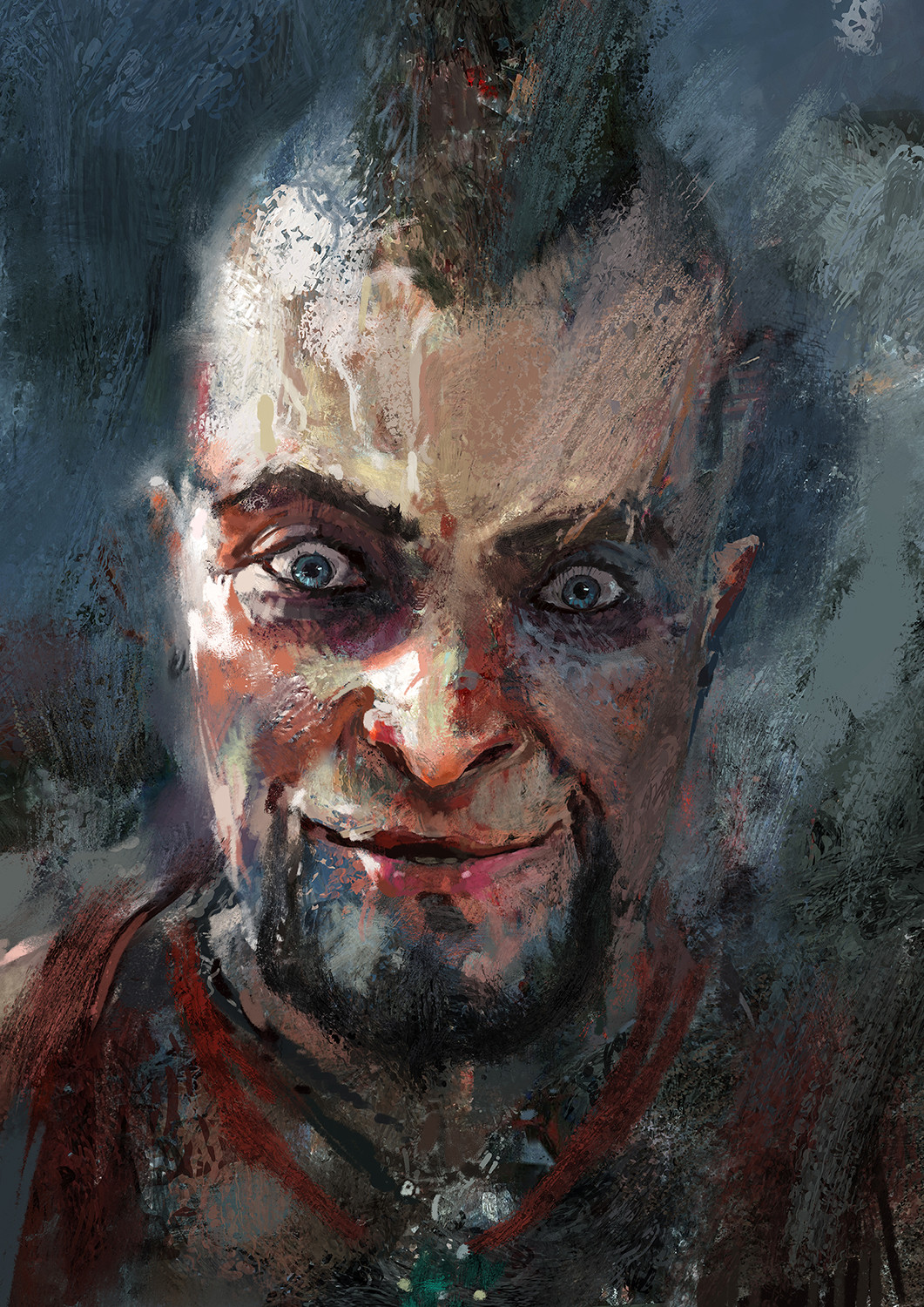
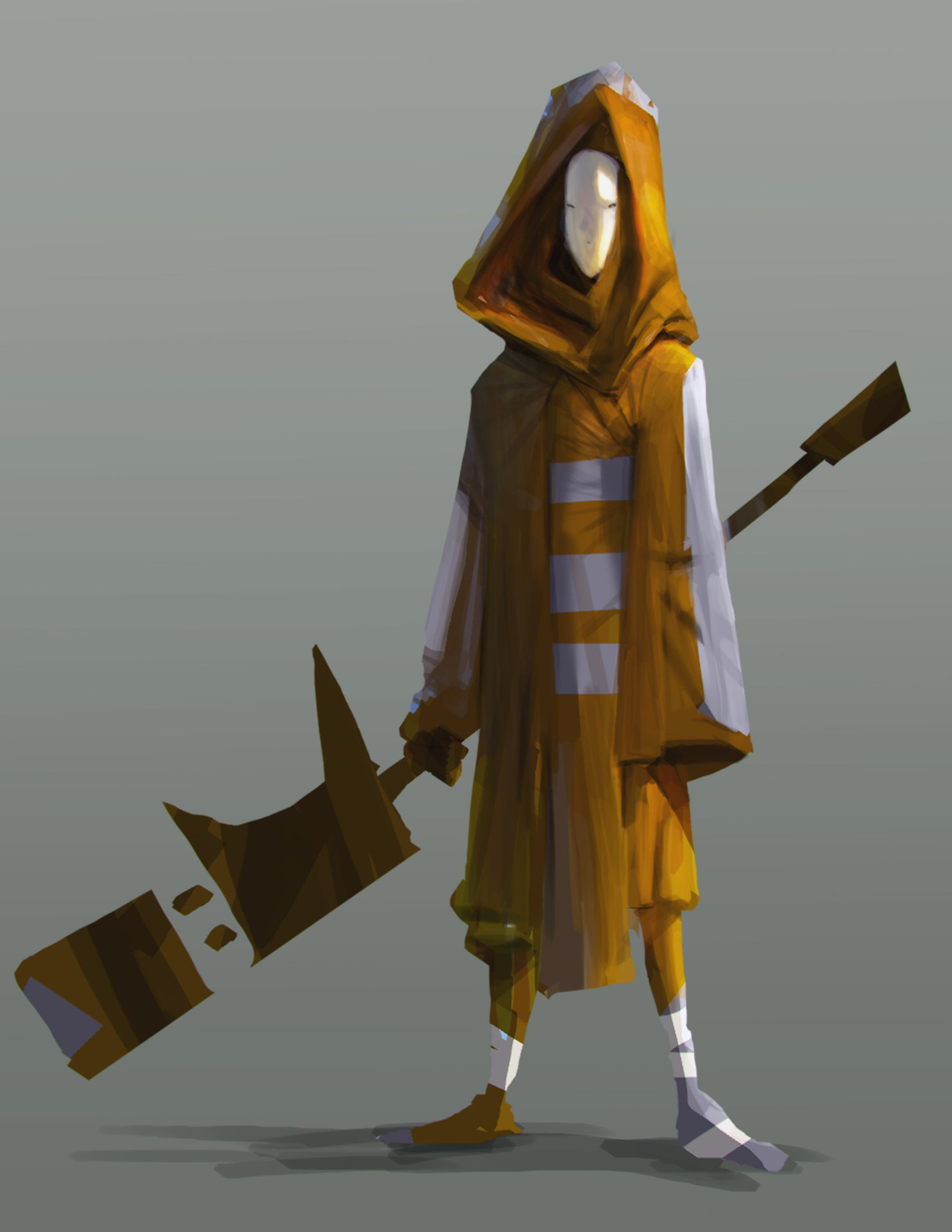
Happy holidays. To ring in 2021, let's look at what I've been working on these past months. I'll release the full version with a dungeon, a simple hexcrawl, and a city before mid-March 20XX.

Features:

  • no core rules (gasp!)
  • a redone version of my Berzerker and 5 other classes
  • the finished Calligrapher 
  • diegetic and semi-diegetic advancement (no XP!)
  • travel rules
  • and lore!

By yang qi917, click the image to get the PDF!


Monday, November 2, 2020

On Magic Words, Word Magic, and Spells

This post would not have come into existence without Lexi over at A Blasted, Cratered Land.  

Some of the following material comes from my new GLOGhack HEIMJING, which I will release before the end of this year. Happy GLOGtober.

What are magic words?

Solidary words strung together that require more effort to use than a more typical GLOG spell. To give some touchstones, here are a couple GLOG spells that require varying amounts of input to adjudicate, taken from the excellent list of 100 Orthodox Spells by Skerples. I'll rate these on a scale from 1-5 in terms of mental spoon cost, from barely noticeable to totally distracting from the main game.

Negasonic Ray

R: [dice]x20‘ cone T: area D: concentration

"Rippling rings of purple light pour from the caster's forehead. All sounds are cancelled within the area of this spell. Creatures are deafened until the spell ends or they leave the spell's area."

This is about as easy to parse as it gets. For a player or GM busy tracking other numbers like exact inventory, this is a mental lacunae amidst coin counting. However, while the immediate effect is simple to resolve, the ongoing area of effect and how it affects interactions requires some brainpower from the GM's and the party, especially in tactical engagements where using this spell may deprive creatures of communication ability. Any spell that has an exact radius of effect also requires a spoon to decide what is and isn't within range.

Initial spoon cost: Players 1, GM 2

Ongoing spoon cost: Players 2 (1), GM 3 (4)

Oxhold's Lament

R: 120' T: creature D: 0

"Target creature of [dice] HD or less must Save vs Fear or take a Morale check, or believe that someone close to them has suddenly and tragically died. They will not associate the caster with this death, but intelligent creatures may believe the caster is only informing them to cause them grief."

This requires an analysis of the target creature, which is an unknown quantity, and uses more of the GM's spoons briefly to resolve. It also requires foresight on the player's part - a zombie will not be affected by grief like it would be by deafness. Despite the higher initial uncertainty, the ongoing effect is singular, which usually makes it simpler to rule over time than the Negasonic Ray. 

Initial spoon cost: Players 2, GM 3

Ongoing spoon cost: Players 1, GM 2

Now, higher spoon costs aren't bad. Spells need to have a variety of both immediate/ongoing effects as well as different levels of complexity. The issue comes when the spoons are too unevenly weighted. In both examples, the GM has to do more work maintaining both spells. 

(Yes, the GM does more work than the players. This is an unspoken rule of D&D.)

Another complaint: players usually have less motivation to track the durations of negative effects. If a party deafens themselves using Negasonic Ray and continues to communicate normally, it is up to the GM to re-enforce the spell as they see fit. This is reflected in the parenthetical spoon costs. Other systems won't necessarily solve this problem, but might alleviate it.

A good rule of thumb for measuring spoon cost is the amount of "uh, ums" that are thrown out while a GM thinks over a spell. More than 4 "err's" and that spell is a tricky one.

One final comment: any GLOG magic system may steal another spoon by stumbling into mishaps or dooms, which may affect other characters. This isn't...bad, really - it just takes longer to resolve the individual spell. If that mishap or doom centers squarely on the wizard, though, it lengthens the time spent waiting for the spell and all associated effects to resolve, which is something to keep in mind when writing spoon-greedy spells. (For Skerples' Sorcerer, this is particularly notorious, but part of the fun with Sorcerers is waiting for them to explode.)

What to do? 

I assume you don't enjoy memorizing and ruling on specifically worded 5e spells that frontload spoons through mechanical complexity. Some people like that - power to them! - I always found it more interesting to seek loopholes in the wording or exploit rule conflicts rather than come up with creative ways to apply the rigidly written spell. I also don't like math. Now you know my biases.

So, magic words. A good way to make this less complex and more freeform? 

Yes and no. On paper, magic word systems are a designer's dream - simply put down a list, give a couple vague guidelines, and off to the races with you. 

The one I wrote was simple: roll 1d20 on a word list, then bash the words together, adding prepositions as necessary to make a unique spell.

Any magic word system quickly runs into another unspoken rule: what any mechanic lacks in written complexity it makes up for in spoon complexity. Interpretation on paper + interpretation at table = spoon total. (Note that increasing written complexity does not decrease spoon complexity past a certain point.)

Magic word systems end up being entirely GM reliant in most cases. Some give players a good amount of power to interpret the effects, but all of them involve a serious negotiation between the player and GM both in fiction and out of fiction that happens aside from the rest of the game. 

Now, I enjoy making a narrative out of broadly applied tools, but rebalancing spoon distribution by taking all of them isn't the goal. Any normal action in a game, unless directed to the entire party, shouldn't take up all the GM's attention for long. A minute is too long.

Of course, there are exceptions, like rolling on a death and dismemberment table, or negotiation between the party spokesperson and a dragon, but that creates additional tension because the results of those focused interactions affect other party members. Engaging in a side dialogue bores other players, especially over a normal action like casting a spell.

Be careful that you don't let your enjoyment of problem-solving get in the way of a well-paced game!

Alexandra Hodgson


What about word magic systems? How are they different?

Let's look at the core mechanic for Lexi's Psion.

"WORD: You are a WORD. To wield your psionic powers, compose a sentence that uses your WORD as the main verb. Roll 1d6 for each word in the sentence. If the total is less than your INT, the sentence occurs, to the letter. If the total is greater, the GM gets to change 1 of the words in the sentence (besides your word) for each die that came up 3 or greater, then the new sentence takes effect. In any case, something will happen. Psionic effects only persist while you are within line of sight. You can only have (INT) words of effects going at any time."

This begins something important: shifting the onus of magical creation and the spoon burden from the GM to the player. It also doesn't mandate GM interaction; smart players with a reasonable Int score can probably fashion a workable sentence without involving them most of the time.

Initial spoon cost: Player 3-5, GM 1-3

Ongoing spoon cost: Player 1-2, GM 1-2

To wit: magic word systems are where you kitbash words together to create unique effects and then negotiate these effects, where word magic systems involve crafting short spell-like phrases that are simple to arbitrate. There is overlap between the two, but a well-designed word magic system will require less GM spoons than a magic word system. (If there are other definitions, please let me know.)

It wouldn't be a Lexi class without a list of quality options, though, so let's examine some of those.

"9. Gourmand. When you eat something, you can choose a WORD it is. That WORD is immutable in your sentences. You can only have (Psion level) of words eaten at any one time."

This is an excellent effect that is entirely on the player to track. It adds complexity without drastically increasing the initial spoon cost for either party.

Seems like all this spoon discussion veils the cold, hard fact that word magic is wrangling words into sentences following specific rules. Like poetry. 

Hm, that's a good idea!

"Couplets: You can write two short, simple lines of doggerel in runes. They must rhyme and follow the same meter. If you read the couplet aloud (takes a round), it takes effect."

This is taken from my Calligrapher class. I worried placing all the onus on the player to craft a small poem would be handicapping or distract from the main game, but my Calligrapher seems to be enjoying himself so far! Here are some quality examples:

"O dangling links of iron chain,

break and drop like the summer rain"

-

"Go forth phantom eyes, fly on in my stead"

Bestow a vision of what lies ahead"

-

"One falling to heaven below

Drift back up, lighter than fresh snow"

-

"Oblid is a foolish bastard

I, WingTam, am Dungeon Master"

The last one isn't useable (or is it?), but I appreciate a good turn of verse. 

In case you've been counting, each verse is 10 syllables or less. This appears to be a sweet spot. I'd also rule that people who wanted to compose in another language could do so as long as they provided the translation. Putting the couplets in chat is mandatory, but English isn't. 

I also restricted the use of Calligrapher abilities to 2 x [templates] per day, so poems face a stiff bottleneck.

Initial cost: Players 3-5, GM 1-2

Ongoing cost: Players 1-2, GM 1-2

What if composing poetry isn't my preferred mode of expression?

Fear not, my sweet readers. Here's the other word magic method that Calligraphers can choose:

"Logograms: You have mastered 2 logograms. If you deduce a similarity between a thing and your logogram and write it down (takes one round), you may steal that similarity, even placing it on another. Stamping is valid."

I can't offer much commentary or spoon estimates on this one because it is untested, but I can say that it's simple to create another variant by having Logograms boost similarities instead of taking them.

While this method may have a higher spoon cost to resolve exactly the effects of stealing something linked to a Logogram (eg: taking 'size' from a giant with the 'Mountain' logogram) I think this will create more tactical scenarios with power transfer. (I apologize for using logogram so much, but 'character' already has a meaning in D&D.)

One of the reasons word magic systems are rare is that they're very hard to concisely write and balance. My advice is to spend less time mechanically delineating restrictions that can be made with common sense and simply write your central concept down. It's true that you'll have to spend more spoons answering questions in play, but GM's can't anticipate player questions anyways. Here are some ideas to get you thinking:

Word Magic Concepts: (1d6)

  1. Wordplay guidelines (number of syllables, meter, rhyming scheme, anagrams, etc)
  2. Conceptual parallels/inversions
  3. Number of words (total under a number, total equal to prime numbers, etc)
  4. Mythological cosmology (hierarchy of concepts/words)
  5. Storytelling
  6. Invention (inventing words??? perhaps from syllables?)
A good word magic system should encourage lateral thinking on the player's part to manifest the effect they desire, and incur a minimal spoon cost for the GM.
Thursday, September 24, 2020

Submerged Spire of Sarpedon the Shaper: Sessions 2 and 3

 Previous report here. Underwater playtest of Lexi's Sawn-Off rules in the eponymous dungeon

Dramatis Personae:

Lexi

Micah the Earth Elementalist and Krokka the Butcher. They are half-siblings.

Nick:

Boris the Veteran and Johnathan the Traveler.

Phlox:

Samsa the Occultist and Gernald the Traveler.

Exhausted from their near escape, the group collapsed under the stifling blanket of the afternoon sun, passing into the realms of sleep, and awoke to stars.

Samsa and Gernald had joined the venture so Boris and Krokka opted to stay behind to recover from their bodily traumas.

Not wishing to revisit the surrounding towers so soon, Micah, Johnathan, Samsa, and Gernald waded into the ruffling surf, venturing into the cavernous dome topping the central tower. Inside, a stone sculpture and altar plastered in congealed seaweed with a healthy sprinkling of barnacles. A spiral staircase wound upwards through the ceiling and downwards into full-dark water.

Gernald, knowing the tongue of Carvings, stepped forward and entreated the sculpture to conversation. It responded, promising to answer one question if the group scoured its surface of matter.

The party assented, and Johnathan found a wavy knife nestled with rusty flutes near the altar during the cleaning. Much debate was had over the question, but finally Gernald bowed and asked: "What are the most dangerous things in this place?"

The rosy statue replied: "The one who waits, the one who stings, the one who devours, and the one who grasps. Most importantly - the one who crushes."

While Micah pondered the form of such things, Gernald, Samsa, and Johnathan ascended the spiral staircase and happened upon a huge, tarnished bell. The clapper was surprisingly clean, and radiated power from its inscriptions. Gernald managed to sort out a feeling of humility and routine from the north side and joviality or stirring from the south side. 

[DM's Note: This room originally existed at beach level, above the statue room, but I forgot that and retconned the bell to the roof.]

Samsa declared her intent to ring the bell. Johnathan and Gernald quickly retreated. After delicately testing the clapper, Samsa rung the bell, producing two mighty knells but no further noise.

Gernald noted it was 2:00 in the morning.

The bellringers joined Micah and plunged into the inky swell. The next room had walls adorned with stone protrusions, suitable for shelving, despite the lack of shelves. The party noted a large array of objects covered by silt, and recovered some marvellous curios.

Descending further to the next level, the party found an assortment of marble tables, one surrounded with opalescent seats fashioned from giant clams. Their skin tingled as they swam around. Johnathan, while examining a fireplace, was accosted by a dreadful snake skeleton that paralyzed him with one bite!

[DM's Note: I hate paralysis. I find it to be a lazy mechanic that engenders frustration and boredom. Fortunately, the party made their Con saves quite well.]

After a panicked retreat, it became apparent the party could not outpace the creature. Samsa summoned Clippet, Lord of Ducks, who proceeded to swim upwards while carping about the unpleasantness of the situation. The others stood and fought, getting in some mighty blows. Micah briefly held the thing at bay with a stone tentacle, and the creature retreated.

They looked at each other, then, for a brief moment.

"Kill?"

"Kill."

"Kill....kill...KILL!"

In seconds, the skeleton lay in pieces. The group ate briefly.

The party swam into the portal from which the skeleton issued forth, discovering another pile of bones!

…These bones did not attempt to murder them.

After rifling through the pile, the party recovered a handful of coins and left, travelling down the staircase in this lesser tower to a curious room filled with many orbs. After some prodding, the orbs were identified as a multitude of woks, so the party resolved to turn them over. Most yielded forms of wildlife, though one was cemented by an unknown substance to the floor. It was let alone.

Under the largest wok, they discovered a mass of small eels squiggling around an red, faceted object. Accompanying these were four large eels that darted out and began circling the exterior of the room. Some debating resulted, but ultimately the party opted to leave the object alone.

[DM's Note: Originally, this room held nothing but kitchen utensils, but after describing the woks as "orbs", I felt a small measure of guilt at arising hopes and came up with some orb inhabitants.]

 Swimming upwards and then down to the next level through the central tower, the group discovered some basalt statues, more tables, and a suspiciously intact, well-carved wooden chair that identified itself as a "hot air detector." After more interrogation by Gernald, the chair revealed itself to be a thought reader, and expressed concern over it's master's location.

"Pray tell, how has my master conducted himself recently? I have not been graced with his presence in some time."

"I have had no occasion to worry over either his hospitality or his behavior."

"Ah, then you must be a special guest, indeed! My master holds very few people in any regard."

Our divers' skin tingled, and suddenly anemones erupted from Johnathan's eye sockets! Somehow, he retained vision through the tips of their tentacles. After some commiseration our divers continued, Johnathan opting to sit in the chair.

[DM's Note: Boris is the only original group member who hasn't been mutated. I wonder why?]

Concentrating, Johnathan scanned the lesser towers adjourning his current location, discovering a muffled clamor in one, silence in another, and finally three intelligences in the last. 

He felt a whetted hunger and, horribly, an awareness of his intrusion! One mind, filled with malice, cut itself off from his perception, and the other two quickly moved out of range. 

The party moved to retreat upwards through the center staircase, wondering whether they had time to decompress or if they had to risk depth sickness. Such speculation was stifled by the arrival of those intelligences sensed previously. 

These horrid creatures, equal parts spider and human, engaged the party in mortal combat. Micah bent the walls to prevent ingress, but the things advanced, using the tight spaces against the party, pinning some to the ground.

After several tense rounds of combat and some lucky dodges, the party managed to escape largely unharmed, bringing the creatures down with relentless spears. Johnathan, however, was knocked unconscious, necessitating a proper retreat.

[DM's Note: These creatures had a "save vs Death" ability, which I also dislike. I've amended it to permanent ability score damage on a failed save, not that it matters now.]

For the second time in four hours, our divers stumbled out of the star-speckled surf with an unconscious member.

Feedback: Sawn-Off's combat system is beginning to grate on me. Players autohit enemies, but get not only DR from armor but also the option to roll Defense (roll 1d20, add relevant ability score, try to get 20+) to dodge an attack. Granted, DR/Defense only work against one attack each, but enemies have neither DR nor Defense options, making combat trivial, if time-consuming against tougher foes. Very few enemies have multiple attacks.

I have some ideas to fix this, and I'll hopefully report back with some progress. Find out next time!

Wednesday, September 9, 2020

Submerged Spire of Sarpedon the Shaper: Session 1

 Dungeon: Submerged Spire of Sarpedon the Shaper by Ben L.

System: Sawn-Off (an upcoming GLOGhack by Lexi). We're playtesting it: the full version has not been released yet.

Players:

Lexi - wrote Sawn-Off and many other good things.

Nick - recently released a neat 0.9 of a system called Nothing Ventured. 

Characters:

(L) Micah: An Elementalist specializing in earth. Half-sibling of Krokka.

(L) Krokka: A Butcher well-versed in making meat.

(L) Mercenary: A hireling.

(N) Boris: A well-scarred Veteran. 

(N) Johnathan: A Traveler quite handy with a shovel.

(N) Robert: another mercenary hireling.

Content warning: body horror. All good? Righto.

Our intrepid band has been hired to recover an ancient tome from a submerged dungeon that once hosted a potent sorcerer-king renowned for blending creatures through generous application of mutagens.

After wading into the surf, our heroes took one look at the shadowed, dripping portal facing them and opted to dive in search of a...less foreboding entrance. Weighing themselves down, they landed upon half-ruined stairs and descended into an old, silted room that crowned one of the two smaller towers still intact.

Despite the multiplicity of crags and barnacles dotting the floor, nothing of value was found, and the party ventured down a exterior stairway to the other secondary tower. 

As Robert's flare began to illuminate the darkened room beyond, tragedy! As his armored foot landed upon the penultimate step, a ripple of light spread outwards, revealing strange runes, and Robert was engulfed in a swarm of bubbles. When they cleared not seconds later, his blistered, pinkish corpse sank gently towards the bottom of the steps, while the flare began to float upwards. 

[DM's Note: The trap at the bottom of this staircase activates whenever an object of significant size enters it. There is no indication that it needs time to reset, so I gave it a small reset duration, but was probably too generous letting the group loot Robert's corpse and then pass through the trapped area. I corrected this assumption at the party's cost later.]

Boris quickly snatched the flare and then prodded Robert's corpse, finding it uncomfortably warm. He then grabbed Robert's spear, ignoring the cooked flesh rubbing off the boiled fingers, and the others followed him into the next room. 

This room proved to be more fascinating than the last: a huge coral of unknown provenance occupied one side, coruscating in a rainbow of colors. Beneath the coral, an array of verdigris-ridden pipes reaching from the floor to the ceiling.

The coral's illumination reacted to Boris and Micah, so Mercenary chipped off a fist-sized chunk to keep. Fortunately, the liberated coral retained its luminosity. The party sifted through the muck, finding a hermetically sealed jar of dried eels. Their first flare sputtered out.

They resolved to move upwards, reasoning that the pipes had to originate from somewhere. As they ascended a set of interior stairs, the flare cast thready light upon a curious scene: jellyfish of all hues crowding around a glowing green pillar with pipes branching from its base. Some jellies drifted towards the unfamiliar light, and combat was joined.

Initially, the party's armor and defense served them well. A jelly soon settled over Mercenary's head, causing their face to blacken and pucker. In seconds, Mercenary's struggles ceased. Our heroes ascertained they would not win this fight with shovels or spears alone.

Boris, drawing upon his arcane tattoo, cast Air Wall, stranding some smaller jellyfish inside two thick slabs of air as the very water drew apart. However, as he did so, the remaining jellies rotated in unison and moved towards him in glowing, purposeful streams. Boris suffered further injuries from larger jellies, and Micah resolved to aid their ally.

Micah called upon the swirling silt underfoot, impelling it to rise up in a turbulent cloud between the two Air Walls Boris had conjured. Immediately, the jellies reoriented towards them, but the walls held those flickering, poisonous creatures at bay.

Two large jellyfish forced their way through the air wall, and were left punctured, colorless, and drifting. 

Johnathan, notably, acquitted himself well with his shovel, but gently loosed the spear from Mercenary's belt for the future.

[DM Note: Boris, thanks to his armor's DR, managed to make it out of the fight with 0 HP. Lucky duck! The fight itself went relatively well thanks to Sawn-Off's autohit rules, even though I kept forgetting individual initiatives. A hit from each jelly that dealt damage (eg: got past DR or evaded a Defense action) triggered a Con save versus poison, which everybody somehow made. It helped that the most assaulted characters had 17 Con.]

While Krokka butchered some jellyfish as potential food, Boris took his second trophy, gaining the ability to Identify Magic from the jellies' mindless attraction to arcane puissance. The party ate to restore their fortitude (an odd endeavor underwater) and Micah expressed interest in traveling through the pipes to deeper floors. 

Towards that end, Micah struck the green pillar once! twice! and the glass column, already cracked with time, shattered. Many things happened in quick succession afterwards. 

Firstly, a wave of roiling green liquid, heavier than water, flowed out of the pillar, and all parties present in the room felt their skin tingle as the emerald light washed over them. Then, the lump of rainbow coral Micah possessed shone with a clarion alabaster light, and burst outwards in a frenzy of branching growth!

Our heroes, wisely, began to flee the room, but the proliferating coral ensnared Krokka and Boris. Micah turned towards their sister and screamed silently as their eyes popped. Seconds later, a bubbling pain erupted in their forearms, and new folds of skin disclosed fresh orbs. Frantically swinging their arms, bejeweled with eyes, Micah advanced towards Krokka.

Boris, summoning his strength, burst free of the grasping coral, and stalked towards the stairs pausing not for his compatriots. Johnathan, already fleeing down the steps, looked backwards at the silhouetted figures then pressed onwards as the coral closed in. 

With Micah's help, Krokka broke free, but spasmed in pain as the tingling sensation sunk into her bones. Small, fluted holes popped open where the bone cleaved most close to her skin, and small antlike creatures crawled out, swarming over her limbs and then retreating to her marrow.

So burdened, the siblings helped each other down the steps, avoiding the encroaching coral. They joined Boris and Johnathan in staring wildly around the room below.

[DM's Note: The pillar contains a potent mutagen referenced later in the dungeon. There are, however, no guidelines for what happens if the pillar is broken, so I improvised. Each round the party remained within the philodendronian light, they had to roll a Save vs Con to avoid mutation and a Save vs Dex to avoid the coral. This was not quick, but it was dramatic. The rainbow coral has a range of possible effects when exposed to magic items, and that specific chunk Micah bore decided to grow.]

As the party debated their options, the tower trembled, and a flagstone plummeted from the ceiling above, trailing greenish silt. A thick coral protrusion forced itself through the hole.

The large fan of rainbow coral against the far wall began to oscillate wildly, with some parts spalling off the main body, others withering and blackening, and yet others beginning to grow outwards.

The party had four options.

  1. Exit through the trapped entrance from whence they came.
  2. Exit down the ruined stairs to the northeast, into darker depths.
  3. Pry open a silted, debris-covered door on the eastern wall.
  4. Descend further into the tower.
With time running out, they opted to exit through the only familiar entrance, knowing the risks. One barrier to swift ascent: their heavy gear, which enabled them to walk along the floor. Each member swiftly dropped half their pack, and swam outwards as viridian shafts sifted down from the ceiling. The trap, however, activated again, encasing both the leading Krokka and the trailing Boris in bubbles!

Boris, already weakened from the previous fighting, began limply drifting upwards with blistered legs. The others carried him out into the surf, panting under the hot afternoon sun.

~ finis ~

[DM Note: The secret door from room 7 to room 6 is noted in room 6's description, but not room 7's. This was a minor aggravation.]

It was a quite excellent session. I was surprised at how quickly the party resolved to begin interacting with objects, but I should have choreographed the risks better. Micah planned to travel through the pipes deeper into the dungeon, which would theoretically be quite possible were it not for the, er, mutagen.

Feedback on Sawn-Off: There were some edge cases that needed to be clarified (establishing what exactly a Veteran's trophy does at first level, deciding if initiative needed to be rerolled each round) but the core rules are quite breathable and lovely! I greatly enjoyed the freedom afforded to improvise aided by some small, handy tables.

One critique: combat quickly fell into a routine of "well, even if I'm not getting targeted, I should Defend". While the existence of other actions is clearly outlined, players fell into the habit of pressing familiar buttons. I perhaps aided this behavior by prompting them to describe all the actions they wanted to take, and I'll check myself in the future.

IF YOU ARE A CURRENT OR FUTURE PLAYER DO NOT READ ANY FURTHER.

So, the main mutagen has been released, and the coral is feeding off it like a weed in moist soil. I envision it eventually working its way through the pipes and into the entire facility in an attempt to absorb every last scrap. This means that eventually, all pipes will burst, flooding whatever's managed to remain dry. My players are now on a timer to recover the book, and I'll choreograph the creaking pipes.

The tower that housed the mutagen will also be completely overgrown with coral and collapsed by the time they get back.

Such magical power must go somewhere. Deep inside the winding carbonate chambers, empowered polyps write and twist, agonized in the throes of mutation. What beings will emerge? Find out next time!

Friday, July 17, 2020

Charcuterie Board: A Community GLOG Zine

THE ZINE IS RELEASED HERE!


Hello, past, present, and future readers! This post is an official announcement for Charcuterie Board, a collection of content by various GLOGgers. This collection will showcase what GLOG can be, not what GLOG is, because we believe that GLOG is a decentralized philosophy. 

Our unofficial mascot

That does make it hard to explain to newcomers, however, so we're bringing material to feast your eyes upon. If you're interested in contributing GLOG content under a Creative Commons NonCommercial license, please fill out the form below! 

Please note that page space is likely limited to the first 25 people who respond, but we're always open to editors, proofreaders, and artists. The deadline for signing up is 7/24 CST at midnight, a bit over a week from now.

Sign Up Here!


If you're confused as to what the GLOG is, please check out the following links:

1. http://goblinpunch.blogspot.com/2016/05/the-glog.html
The original ruleset. Where it all started.

The updated ruleset. Very recent.

3. https://madqueenscourt.blogspot.com/2020/07/glog-for-gretchlings-or-notes-towards.html
Reasons on why to write GLOG, and many, many links to the rest of the GLOGosphere.

Who we are as of March 2019. Much has changed since then. Link 3 is the most recent summary.

Please head on over to #charcuterie-board in the OSR Discord if you want to talk to us about this, or just drop by the #glog-ghetto if you're curious about what GLOGgers are like in their natural habitat.

We're looking forwards to seeing you!

Wednesday, July 15, 2020

Kerosene Refiner

I'm helping to playtest SquigBoss's Seas of Sand campaign setting, which is vaguely North African, so I made an oil refiner like the boys rolled with in the Islamic Golden Age to wreak some havoc.

Kerosene Refiner
Start with an alembic, fireproof gloves, a bellows-powered spray nozzle, two flasks of crude oil, and some leathery scars.
A: Distiller, Smoke Squint
B: Appeasement, Soot Lungs
C: Alchemy, Smouldering Scars
D: Chug, Inferno Gate

(A) Distiller: You can distill crude oil into kerosene or petroleum jelly, and spray liquids around using your nozzle.
It takes a night or a day to distill [template]+1 flasks of oil or jelly, provided you have an equivalent amount of crude.
Your nozzle is two-handed, holds one flask of oil, and has a range of 30 feet. It gains +10 feet in range for every other template you take in this class, and at Template C it holds another flask of oil. It takes one action to spray your nozzle and one turn to reload it.

(A) Smoke Squint: You can see through fire and smoke like clear water.

(B) Appeasement: You can convince a fire to stop provided you throw something valuable into it immediately. A gold piece/dash of water for a campfire, fistfuls of bling/food animals/barrel of water for a bonfire, and literal crowns/people/shipload of water/artifacts for a city block eating inferno.

(B) Soot Lungs: You can breathe in smoke normally.

(C) Alchemy: You can refine most liquids into a flammable substance.

(C) Smouldering Scars: If you mortify a body part in fire, like a hand or calf or face, you can carry fire on that skin without burning. Lose 1 HP permanently for every part you mortify.

(D) Chug: You can drink a pitcher of something flammable without any ill effects and spray it up to a day later.

(D) Inferno Gate: Step through fires you set like doorways.

Short and sweet. This is perhaps one of my favorite GLOG classes I've ever made.

Sunday, July 12, 2020

How I Learned to Stop Worrying and Love the GLOG

This is another essay on the nature of the GLOG. I'm not going to talk about what the GLOG is for everyone, rather, what it is to me. My take shares similarities with many others. 

5 people have already defined the entire GLOG better than I. These four links are the closest us gretchlings (a term for GLOGgers) have to an elucidation of our philosophy. 

Arnold originated the GLOG. Here is the creator's vision. Includes an intro funnel dungeon that I personally playtested and can vouch for. 

Skerples picked up the GLOG and sprinted with it. Take a look at Many Rats on Sticks; it's the most realized GLOG hack for now.

Anne writes up our history as of March 2019 over here. The intro paragraphs do an excellent job of describing us.

A post by a veteran GLOGger, Lexi, who summarizes GLOG very concisely.

Vayra has compiled reasons to move away from 5e and towards the GLOG as well as other essays like this one. If you want the most comprehensive overview, with links to immediately usable material, and more musings on GLOG, go here. This link is the first gretchling-created intro to GLOG.

Before we begin, the answers are not here. They are inside you: what game do you want to run? Where? With who? These questions will have the strongest influence on your GLOG.

Racecars and GLOG Design

As someone who came strictly from 5e, I'll start by talking about the transition. 5e is an ornate, well-tuned, much-played game engine. The published adventures offer an easy pipeline to enjoyable gaming provided you read the owner's manual. 

Every roll has a place. Every part slots into the chassis. It's soothing how many decisions are made for 5e users. Slip behind the wheel, fasten your seatbelt, take off. There is nothing wrong with this gaming provided you're comfortable playing the same kind of game every time. The same ride, the same laps, the same Indy 500. 5e can give that to you. What can GLOG give?

Fuck owner's manuals.

GLOG is not a delicious Ferrari. GLOG is a jury-rigged piece of shit that eats replacement parts and tools, squats in your garage like a toad, and discharges cloying, acrid smoke with alarming glee.

But it's yours. 

Rather than trying to modify a product that does exactly what the manufacturer intended, you can stoop and build your own up with well-worn tools. 

Scaffolding and Constitution(s)

To me, games are both math and art. Math demands answers, art merely offers questions. Therefore, RPG's are a never-ending cycle of change. This is good. It also means a couple things for GLOG.

Any GLOGhack is encrusted with scaffolding aplenty. Scaffolding serves to support your structure, not to define or enclose it. All GLOG mechanics are scaffolding.

Us gamers hold many mechanics to be self-evident. HP, XP, levels, ConDexStrWisChaInt. These are all well and good provided they're what you want. If you don't want them, get rid of them. Laws are laws until they aren't. Please don't feel like you have to keep a part of your game around if you don't use it. 

You don't have to design every possible interaction your players might have. Mechanics, as concrete things to latch onto, lead to gameplay, so design interfaces for the interactions you want your players to have. Everything else can be decided by a yes, no, quick definition, or a roll. 

As an example: I am currently running a game in the Mesoamerican underworld, XIBALBA. I want my players to be able to alter their world through commonly known religious rituals (spells) and drugs, and for my players to struggle against disease. Therefore, I have scaffolding for rituals, drug use/addiction, and disease. Climbing is not particularly interesting to me, so any climbing challenges will be resolved by my players describing what they'll do or a roll.

Combat is a system lots of us struggle to define. Do you want your game to be focused on combat? If not, why make it a complex system? It might seem shocking to decide combat with a single roll, but don't create a pathway for engagement if you have no interest in using it. 

That said, don't burn or shred any mechanic that doesn't work. Keep it around. You may find a use for it later. If you build up enough discarded bits and bobs in a compost of sorts, coherent ideas may begin to emerge. 

Gretchlings Steal

It's a lot of work to knock together a ruleset. Why reinvent the wheel when you can take it from others? All the rules in my GLOGhack that I deemed important but didn't want to write I copied from Many Rats on Sticks by Skerples. Some classes were lifted straight from blogs and other GLOGhacks. If someone made a pretty shiny thing I liked, I took it. 

The majority of XIBALBA has been cribbed from Veins of the Earth and a hexcrawl Skerples wrote for VotE. 

Us GLOGers maintain an Excel spreadsheet with all the GLOG classes and rulesets ever written. As of writing, there are 474 unique classes and 28 distinct GLOG hacks. There is much to steal from here, and we share gladly.

This makes attribution important. Cite your sources. Yes, that's not theft, but GLOG contains many contradictions. 

Symmetry

Symmetry makes design easier to understand. Part of it is reuse, part of it is the partitioning humans apply to all things. If your system is roll-under, low values should probably be desirable in many categories. Attack rolls, saves, initiative rolls, etc. 

One gene commonly cited as a GLOG identifier is the magic system. The power of a spell is determined using d6's. You can add more d6's to power up a spell, but if you roll doubles or triples, Mishaps and Dooms happen. This mechanic has spawned 73 wizard schools. 

GLOG is fueled by simple engines like this. I took these Magic Dice (MD) and applied them to Berzerkers (barbarians) and Warlocks. Some people like that take. 

The paradox here is that the simplest ideas are often the most effective. When designing GLOG, try not to create mechanics that solve problems. Try to write tools that alleviate problems, dodge problems, or convert challenges into new problems. 

Who Solves Problems?

One of the central conceits of GLOG (and the entire OSR) is that players actively solve problems. They do this by engaging with the shared, imagined world, not by asking the DM what kind of skill they need to roll to solve the issue. Try to write mechanics that encourage ways to tackle a problem but don't do the work for a player. 

One GLOG saying about mechanics is that they should be like daggers: light, easily adaptable to different problems, and something can be used to kill you. Thanks, Spwack.

Another saying: When mechanics are lackluster, the players are simple and honest. When mechanics are scrutinizing, the players are shrewd and crafty. (Thanks, Vayra). Both types have a place.

Let players discover ways to solve problems. Paths of action should not be binary. 

Where Do I Start?

I believe Phlox said this better than me, so I'll link to that article. To summarize: interesting setting -> interesting system -> interesting PC's. Decide where you want to play a game, create mechanics that you want players to engage with, and then write classes for them to use. If you don't know how to write a GLOG class, welcome! I don't know either. I do know some that look good, though. 

Some tips for classes:
 - Look at the list of 474 classes. Steal.
 - It's generally accepted that 4 templates (levels in a class) are enough features to create an interesting class. Try giving classes one cool thing per template, with the most interesting things in the first template.
 - Don't define everything. Use common sense at the table if necessary.
 - Anyone that's never played an RPG before should be able to grok it in a minute. Maybe 2 if it's a spellcasting class.

As for interesting settings and mechanics: that's work you have to put in. I can't make your settings interesting. 

What Are Your Qualifications Anyway?

I wrote a GLOGhack so that gives me just as much authority as a farting dog. You can find it here, in a perpetual state of disarray. I hope there's something worth stealing.

Conclusions

Let there be no conclusions, because endings are false and I am a consummate liar. I hope this essay has been valuable. Trawl the other submissions to this GLOG challenge over at link #5 at the top.

If you still have questions, feel free to drop us gretchlings a line on our blogs or over in the #glog-ghetto channel in the OSR Discord. Good luck!

Friday, May 8, 2020

BONES: A GLOG HACK

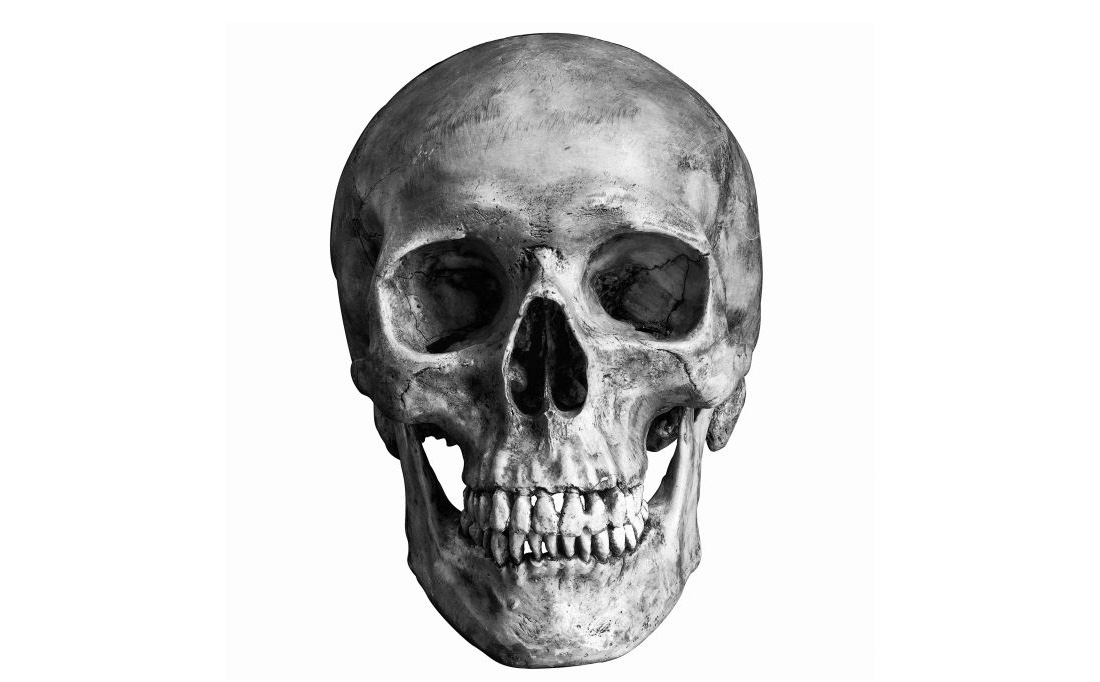
Here's a skeletal GLOG ruleset. Please, enjoy the BONES.


Click the skull for a PDF!

Features
  • 4d4 stat generation for 3 stats
  • No modifiers or derived stats
  • Stats as inventories
  • Simple rules for drugs, diseases, and friends/enemies.
  • Systems and items affecting each stat inventory to create pressure for space
  • Stress-relief enemas
  • And more!
Here's the Google Docs link for an evolving version.

Why These Rules
The following is reproduced at the bottom of these BONES, but in case you don't want to scroll down all that way, here you go:

I reduced the stats to inventories. That’s what a character is, when you pare away the derived numbers - a list of traits that make them an individual. Your PC isn’t defined by their Intelligence and Wisdom. They’re defined by what they know and how they use it, and that information can’t be reduced to a number disassociated from the concepts that define them. Bones PC’s may seem more complex than other OSR systems, but I’d like to argue that I’m simply increasing the information density of a character. The goal is to have all the items inside the stat pissing out. 

Part of the 6-stat orthodoxy is the diffusion of power across stats to avoid any one becoming too good. The risk of imbalance is greater with less stats, but I want my stats more impactful as opposed to struggling to find a purpose for certain stats outside niche class features.

I also included rules for friends because of the weird paradox inherent in dungeoncrawling, where you trust someone to save your life but are careful to not form a lasting attachment because they might die. I say bollocks to that. If y’all’re playing this game together y’all’re probably going to become friends anyway. No need to assume your PC’s are emotionally distant robots. Care for each other. I think the game becomes richer with that kind of investment.

I don’t like numbers. Fiddly +1 to X, -1 to X  - yes, it arouses the pattern finder, but sums are the first thing defenestrated by memory in stressful situations. Does balancing systems of bonuses make the game more fun or are they simply fun to design? Depends on you and your players. 

Does any of the philosophizing above really matter? I don’t know. If 3.5, 5e, or Mothership work for you, go for it. Play what makes you happy. But try to find out what doesn’t work, and make it better.

Have fun!

Thursday, August 22, 2019

Plaster and Pulque: Ability Scores + Stress/Corruption

A long, long time ago, in a post far, far away...

I promised a shining beacon of GLOGness, incandescent in its glory, usability, and flavor. Because incandescent beacons aren't built in a day, y'all get two foundational logs from the eventual fire. It's time to meet the scores! And mutations! And insanities!

Dicebound, on Tumblr
And for the record, good and evil aren't ingrained into race.

Roll 3d6 5 times and record the numbers. If the total is above 50, you may reroll all stats. You choose where the numbers are placed. Low numbers are good.

  1. Constitution: Determines your endurance and Corruption. Subtract your Con roll from 20, divide that number by 2 (rounding down), and record the result as your Corruption score.
  2. Dexterity: Determines your unarmored Dodge and initiative. 
  3. Intelligence: Determines how much your mind can hold. Subtract your Int roll from 20 and record that number as your mental inventory slots.
  4. Strength: Determines physical strength, how much you can carry, and sometimes armored Dodge. Subtract your Strength roll from 20 and record that number as the number of Inventory Slots you have.
  5. Will: Determines how much Stress you can take and your force of personality. Subtract your Will roll from 20, divide that number by 2 (rounding down), and record that number as your Stress score.

Ability Score Comments:
My system is rollover, not sum 21. This is literally reverse roll under. Low scores are good, make one roll, if you get over your score, you succeed. Crits on 20, crit fails on 1. (More on that later.)
This GLOG is also modifierless. All situational bonuses have been replaced with advantage and disadvantage, or roughly +4 or -4. My reasoning is +/-4 is a significant bonus, and anything smaller than that can be ignored without affecting gameplay too much. Also, bonuses and penalties much larger than 4 are pretty damn large. Any roll shifted by 4 on a d20 is shifted by  20%, which is significant enough for me.
Players choose where their stats go after rolling their class. This is as much chargen metagaming as I'm comfortable with. Yes, ome (an upcoming Mesoamerican GLOG spellcaster) will want a high Int to store more spells, but every other stat is designed to be equally urgent. In short, I've tried to decouple stats from specific character classes as much as possible to make any character possible with most any stats. I'm firmly in the class/race determines character camp and not the "well I have 18 Int (high stats are bad!) so maybe I'm not a wizard" camp. This isn't remotely like AD&D; I don't care. Please address those critiques to another PO box.
I don't have Constitution affect hit points at all. Any damage taken at 0 HP is added to Con and triggers a roll on the Death and Dismemberment table. If your Con ever reaches 20 or above at 0 HP, your character dies. Characters with lower Con are more resilient on death's door and are better at fighting exhaustion and corruption, which I think is enough for one stat to mandate. Hit points are influenced by class - more on that in another post.
I'm actually quite happy with how I managed Dexterity. Dodge is what a player rolls over to avoid getting hit. It's modified by armor. Players also roll over their Dexterity each round to go before the monsters (I've never trucked with Wisdom as an initiative stat). Simple, and yet effective. Obviously waxes and wanes in importance with how much combat my campaign has, but so far it's working.
Intelligence is much less of a "spellcaster only stat" than it used to be, thanks to the excellent mental inventory rules written up at the Library of Attnam. While it still feels like a spellcaster priority, it's also important for non-casters because it limits how many languages and skills you can have. The emphasis is on having mental inventory be as much of a challenge for brain-centric classes as physical inventory is for martial classes.
Speaking of physical inventory, Strength is quite essential for everybody. The average number of muscular inventory slots is 10, and they fill up quickly. I've never liked differentiating between Str and Dex based armor, and I didn't want to discard Strength as an option for armor because Dex should not affect movement in plate. Dodge can be based off of Str, but only if armor is worn. More on that in another post.
Will is the new stat. It's a redo of Charisma, encompassing all what I thought Charisma covered: namely, force of personality. It borrows a bit from Wisdom but I'd like to think the majority of Wisdom (common sense) gets bundled into Int. Will governs mental fortitude (so Will::Int as Con::Str/Dex, which I find appropriate.) This stat is the most swingy - some of my players have cautiously invested their good scores into it to avoid cracking and insanity, while others have made it their worst stat. As my stress rules undergo testing, time will tell if that was a good thing or a mistake. So far, I haven't laid on the stress, but that'll change.

Kobe Sek

Stress and Corruption:
Every time you experience something beyond the pale, trauma, or are just really tired, Save or gain a point of Stress in a random mental inventory slot. Record each point of Stress with an S by that mental inventory slot. If you place a point of Stress by an occupied mental inventory slot, you have disadvantage when attempting to use whatever’s in the slot. If you ever gain Stress equal to your Stress score, Save with disadvantage against Will or Crack. If you Crack, remove a point of Stress and roll on the table below. If you pass the Save, halve your Stress and roll on the Virtues table below.
If you Crack, after your breakdown, Save versus Will or roll on the Insanities table below. Insanities take up a mental inventory slot until they’re removed, and every time you give in to or suffer from your Insanity, allies who watch it happen gain 1 Stress. If you ever have a number of Insanities equal to your Stress score, you go homicidally insane.
You can remove Stress through telling your story, drinking, doing drugs, relaxing for a day or more, sex, playing games, chatting with friends, praying, bloodletting, really good food, writing, reading, a good night’s sleep, or anything else the DM okays.
You can remove Insanities through psychiatric treatment, magic, or arcane devices.

d8 Cracks:

  1. Abusive: Why aren't they pulling their weight? For 1d6 rounds when an ally fails an action, they take 1 Stress as you scream obscenities at them.
  2. Blackout: You faint for 1d6 rounds. You can be slapped awake.
  3. Breakdown: You cannot see for tears, nor speak through a sudden stutter. Lasts 1d6 rounds.
  4. Fight-or-Flight: For 1d6 rounds, you either viciously attack the source of Stress, or run away. Your choice.
  5. Hopeless: All is lost. Your despair makes all allies roll with disadvantage for the next round.
  6. Nausea: You gag or vomit for a round, and cannot benefit from Lunch today.
  7. Scream: AAAAAAAAAAAAA for a round. If anyone didn't know you are here, they will now. May provoke a Random Encounter.
  8. Shock: What's happening? Save vs Will once per round, until you succeed you can take no actions.
  9. Berserk. (Only ashanti unless otherwise noted.) You fly into an insane rage and attempt to kill everything you can see for 1d6 rounds. 


d8 Virtues:

  1. Confidence: You will prevail. You deal +1 damage until the end of the encounter.
  2. Courage: There is nothing to fear but fear itself. You are immune to fear and Stress until the end of the encounter.
  3. Focused: Suddenly, a moment of inner peace. You have advantage on your next roll.
  4. Inspiring: Your unwavering resolve emboldens your allies. They may all roll a new Save against one of their current afflictions.
  5. Invincible: You must persevere. You postpone death from Wounds and all Insanity effects until the end of the encounter.
  6. Selfless: You are all in this together. You may redirect an attack from an ally to yourself until the end of the encounter.
  7. Stalwart: None shall pass. You cannot be moved, knocked prone or tripped until the end of the encounter.
  8. Vigorous: You feel more alive than ever before. Heal 1d6 HP.


d20 Insanities:

  1. Addiction: You need your fix to get through the day. If you don't get your drug, you automatically Crack every time you gain Stress, in addition to any withdrawal effects.
  2. Amnesia: Roll d10 on your mental inventory and lose whatever is in the slot you rolled. If you roll an empty slot, that slot is permanently filled with Brain Damage.
  3. Anxiety: You are a nervous wreck. You have disadvantage on Saves vs Fear and all fear effects have double duration for you.
  4. Catatonic: You are completely unresponsive until you can be brought back to town and nursed back to your senses over an extended rest.
  5. Delusion: Roll d6: 1) You are the long-lost heir of the throne. 2) You can fly. 3) You will burn in sunlight. 4) You are of a different race / an animal. 5) You are invincible. 6) All magic is inherently bad. You cannot be convinced otherwise and rationalise any evidence as an illusion, trick, or any barely believable "explanation".
  6. Depression: Every day is a struggle. Roll with disadvantage until the first time you succeed on a roll in a given day.
  7. Hallucinations: The GM might sometimes describe something incorrectly or in a misleading way to you.
  8. Insight: When encountering a thing beyond human comprehension, you have a 50% chance of gaining a useful piece of information, and a 50% chance of trying to claw your eyes out, taking 1d6 damage and blinding yourself for 1d6 rounds.
  9. Minor Compulsion: Once per day when the GM calls for it, you must stop everything else to satisfy your compulsion (wash your hands, count your money, vandalise something). Good roleplaying of the compulsion should prevent the GM from using this at too troublesome times.
  10. Major Compulsion: Once per week when the GM calls for it, you must stop everything else to satisfy your compulsion (kleptomania, necrophilia, cannibalism). Good roleplaying of the compulsion should prevent the GM from using this at too troublesome times.
  11. Nightmares: Save each night or wake up screaming, gaining only half the effects of rest. Alcohol or opiates may grant you serene sleep.
  12. Obsession: You become obsessed with a random person and start following them around. You "love" them. If you don't see them for a day, you automatically Crack every time you gain Stress.
  13. Paranoia: No one counts as an ally to you. You must Save to accept aid or work in a team.
  14. Phobia: You have a phobia based on what caused this insanity (or roll a random one if this does not make sense). Gain 1 Stress when you encounter something that triggers your phobia.
  15. Quirks: You have personality quirks. Severe ones. Roll d8: You 1) talk to yourself, 2) laugh wildly and inappropriately, 3) constantly fidget, 4) eat odd substances, 5) mimic those around you, 6) have irritating tics, 7) stutter, 8) suffer tremors. You take a penalty to Reaction rolls and social checks equal to current Stress.
  16. Sadism: You are brutal and violent. Every time you kill a creature, everyone in sight takes 1 Stress as you revel in the suffering.
  17. Schizophrenia: Make a new character sheet with a different class, but the same name, race, attributes etc. Each session, alternate between these two character sheets.
  18. Self-Mutilation: Every time you would take Stress, you can instead take 1d6 damage. If you take no damage for a whole day, you must hurt yourself for 1d6 damage. You are covered in scars.
  19. Submission: You are seriously aroused by being ordered around. You must Save not to follow a command and may want to seek out someone who will abuse you and treat you like their slave.
  20. Veracity: Every time you deliberately lie, Save or faint.
Chris Bourassa, from Darkest Dungeon

Every time you fail a Save against a harmful magic spell, a radioactive place/item, or antediluvian, mysterious devices, you gain a point(s) of Corruption. Record this with a C next to a physical inventory slot of your choice. If you ever gain Corruption equal to or above your Corr score, Save versus Con or gain a mutation and 2 points of Stress. (Follow the link and roll on the table.) Mutations take up one physical inventory slot permanently. If you ever gain a number of mutations equal to your Corruption, Save versus Will or go homicidally insane, permanently.
You can remove Corruption (and mutations) through magical treatment, special items, and mysterious rituals. Corruption disappears naturally at a rate of one point a week.

Stress/Corruption Design Notes:
The Stress rules were taken directly from Library of Attnam's post on madness mechanics inspired by Darkest Dungeon. They haven't gotten much testing yet, but they're designed to interact with mental and physical inventory in meaningful ways, making both inventory and Stress/Corruption more tangible, associated mechanics rather than just another thing to track. The inspiration for associating S/C with inventory slots comes from DIY & Dragons's excellent series on resource management. Please please please read those posts. I'll touch on them more when I discuss mental and physical inventory and their contents.
Corruption utilizes Arnold K's mutation table. Eventually I'll write my own. Sometime. I promise. Pinky swear.
Corruption's designed to make magic and eldritch locales a larger threat, and to make gaining mutations more player facing. I want Corruption and Stress to have a creeping sense of inevitability, and for the players to be seeking out solutions for them before the effects hit. I also like corruption better as a damage type than "magic", "eldritch", or "anathema", because that word describes the immediate effects of its damage. It corrupts you. Magic is corrupting.
Stress is supposed to show the non-physical damages of the adventuring life, how grinding terror and periodic adrenaline rushes accelerate the gradual erosion of self and sanity. Large dungeons will stress you out, and they will drive you insane if you stay in them long enough.
Mutations and Insanities are supposed to be mostly permanent character baggage. They both cut off inventory slots, thereby depriving players of resources. They both affect roleplaying and how a character is mechanically utilized. My tieflings roll a random beneficial mutation, and one player's spider legs have made a lot of difference. 
These strong negative factors can also be cured back at town/during downtime, making those activities more important. If you emerge from the Spiraling Oubliette of the Plutonium Tecuhtli with four Mutations and two Insanities, you bet your tentacle-ridden ass you're gonna spend that hard earned, slightly radioactive gold on some treatments for your bulging, mucous, saggy armpit that takes up an inventory slot and leaks a highly corrosive fluid when punctured or chafed and is delicious when you lick it.
Stress also disadvantages use of a skill, language, or spell, which can be huge. All the more reason to keep it down and drink the demons back into the closet. Drugs and alcohol can remove Stress so bring along that hip flask and drink after every combat encounter.
Managing when to ask for Stress saves is the most delicate balancing point of these systems. Corruption has pretty hard-coded triggers, but deciding if an event is normally stressful or Stressful has been difficult. I've been softer on my players because this is my first GLOG game, but that's going to change. We haven't had anyone crack yet, but we will soon. And the Stress rules are designed to mimic the Darkest Dungeon mechanics - stress compounds, and it can lead an entire party into a negative death spiral.
Perhaps the most fiddly math in chargen is generating S/C scores.
[Subtract your Con roll from 20, divide that number by 2 (rounding down), and record the result as your Corruption score. Subtract your Will roll from 20, divide that number by 2 (rounding down), and record that number as your Stress score.]
It's not intuitive to any D&D veteran, but it works well as a mechanic. If S/C were simply inverses (20-stat) of Will and Con, I'd need to pile on the Stress and Corruption points to see any physical effects or simply have effects trigger at certain thresholds of S/C. I didn't want to mess with that, so I scaled S/C scores down to make each point feel meaningful without making each one its own stat. If S/C were stats, because they're the inverse of inverse scores, they'd have to be roll-under stats, and that's anathema to a completely roll-over system. Again, it's not elegant math, but as ability scores improve, so do S/C, just more slowly.

More to come on skills, mental/physical inventory, hit points, leveling up, and general class notes. I'm going to unpack my GLOG hack because a lot of design decisions made to create clear, player facing rules can be anything but, and because my GLOG is a very different animal. 

Monday, July 29, 2019

P&P: Rails and Slime - Session 3

Find the previous chapter here!

The cast:
Skitters the tiefling thief.
Ixcuina the tiefling radiomancer.
Werd the human soldier.
Itzapal the ashanti veteran.
Ton, the NPC ashanti soldier.
Tot, the NPC berkins soldier.
Huehue, the NPC ashanti soldier.

The setting: A train bound for the urban battleground of Palenque, a Mayan city. The train consists of 7 cars (from front to back): The conductor/engine, 3 troop transports, 1 officer's quarters, and 2 cargo cars at the end. Conductor's car is #1, the first troop transport #2, etc.

After performing a crude pseudoautopsy on a tridog that might not have been completely dead, the gang decided to split up. Skitters, Werd, and Itzapal went to investigate the top of the engine. After climbing atop the cars, Skitters noted that the wind had picked up considerably. The gang pried open the emergency hatch, noting some resistance from some unidentified goop caking the hatch.

Meanwhile, Ix suggested that the strange tridogs should probably be moved out of a potential engagement. A captain agreed and ordered several soldiers to carry the tridogs to the cargo cars, and out the tridogs went. Ix then located the small wizard who soaked him earlier, and asked for assistance. The child came along willingly, and revealed that they had splashed him with a defoliant earlier because Ix looked green. Ix remained noncommittal.

The gang, with Ix and the child watching from the second car, opened the hatch. As they did so, they rapped on the surface of the train...and something tapped back, matching the intensity of the impacts. When they opened the hatch, they discovered the conductor's hand still affixed to the controls. Unfortunately, those hands trailed off into glistening streaks of slime that wound their way towards the back of the train, where a large, amorphous mass pulsed. Iz and Werd tapped their rifles on the side of the train to distract various grubs meandering about inside. Skitters reached down with his rifle and knocked the controls to half speed.

Ix asks the child what they can do. The kid says they can alter their shape and make potions obey them, adding an ominous comment about an "accident". Ix sighs and asks what happened, and the child narrates how they accidentally turned their brother into a fish monster while playing with a ball.

A moment of silence.

Ix hears some gunshots towards the back of the train.

Iztapal, Skitters, and Werd pull out all their available lantern fuel and, with the help of some twine and rope, lash the flasks into a large bundle, planning to swing the lit bundle through the opened hatch and smash it against the ceiling. Skitters dangles the makeshift molotov off the side of the train, gently swinging it back and forth to build up momentum, and then lobs the smoking bundle neatly into the hatch, where it smashes against the ceiling with a tinkling noise. A blaze of light erupts from the hatch and the party hears a greasy crackling noise that smells like dog bacon.

Itzapal descends and rallies the loud, uncoordinated soldiers in the car, making a stirring speech and outlining a plan of action.

Except nobody volunteers to help her.

The captain then mentions that hazard pay is awarded for especially dangerous combat activities, and people start talking. Some lots are drawn, and three soldiers present themselves to Itzapal: Tot, a timid berkins, Ton, a bulky ashanti, and Huehue, a voluble ashanti, Ton's sister. Iz sends off a couple soldiers (with approval of the captain) to investigate the gunshots. The soldiers return and report that the captain's quarters are locked and unresponsive.

Itzapal files the information away for later and organizes her volunteers into a firing line. She gives a signal, and the transport's door is flung open. Directly ahead, a thing pulses behind a milky, obscured window.

"Fire!"

The window shatters -

"Soldier down! Soldier down!"

- and Itzapal collapses to the ground, stone dead courtesy of massive internal hemorrhaging from her old wounds. Everyone gasps, and her body is quickly moved to the side. Her nonexistent pulse is taken, and almost everyone hushes as her death is announced.

While his comrade drops dead, Ixcuina takes advantage of the shattered window and peers into the engine. A thing like knotted, fleshy ropes with moist orifices adorns the front of the entire engine, with purple grubs crawling in and out of the orifices. It leaks a runny, pink goop from multiple perforations, and Ix takes advantage of its wounded state, draining electrons from a nearby lantern and firing a concentrated blast at the tangled mass, critically dazing it.

Skitters takes advantage of the stun, wrapping a bedroll over the pulsating thing and tearing it off the engine with some meaty snaps. He hoists it up through the emergency hatch, and before it recovers, tosses it off the train. The quivering bundle hits the ground with a thud and unceremoniously rolls to a stop, quickly disappearing in the distance.

Skitters hears a familiar skriii-kreeeeee noise and scampers away from the grubs moving towards him, back to safety. The excitement ended with the party discussing the shocking loss of a comrade.

Tune in soon for Session 4! (Which has already happened. I just need to write it up.)

Notes:
Well, so much for testing the Veteran class. Apparently any chance of instant death the first time Wound Dice are invoked is enough for the (now fired) dice bot to murder a PC. I would say it worked well, but maybe I need to account for the 1.53% chance that any Veteran player will die instantly when invoking their most important class ability. Sigh. Maybe someone else will die and try their hand at the class responsible for 100% of PC deaths so far.
Ixcuina got lucky with his spell because the fleshy thing, despite having no visible light-sensing organs, nonetheless critically failed its save. His luck probably won't hold forever.

Friday, July 26, 2019

Warlock Patron: Tawantinsuyu Imperial Armories

By Inti and Inca Mancoti, you will bring light to these rich, fertile lands. Your light is glorious, blinding, and brief, but while it burns, how wondrous! Soldiers will fear the golden sun on your breast, shells and bullets will strike off you harmlessly, and you will wreak havoc.

Blind and blast! For Sun and Emperor!

Warlock Patron:
Tawantinsuyu Imperial Armories

Anthony Jones

Main warlock rules here. This warlock is dedicated to Lexi, as thanks for everything she's helped me with.

Starting equipment: A pair of darkened glasses, a beaten gold cup, a spyglass, and a quipu.

Boon: 5 in 6 chance to ignore damage from friendly fire. Self-damage does not count. If unsure, flip a coin. Occasionally, when you touch metal, it flashes.

Favors:
Convert ammunition types to different types - cartridges to bullets, artillery shells to bullets, etc - once a day. Can only do this for ammo you’ve used before.
Set off very flammable materials (oil, gunpowder, alcohol, dry tinder, etc) with a touch.
Dry and oil a metal object by running your hands over it.

Goals: Win conflicts for the holder of your contract, ideally the Tawantinsuyu Imperial Armories. Contract expires upon your permanent death or helping your contract holder to win 5 wars, whichever is sooner.

Obligations (1d8):
Kill 3 x [Debt] enemy creatures.
Assassinate [Debt] enemy commanders.
Ferret out [Debt] enemy agents.
Recover 2 x [Debt] taken weapons or equivalent objects.
Capture 3 x [Debt] war prisoners.
Destroy [Debt] enemy fortifications.
Rescue 2 x [Debt] captives.
Help [Debt] operatives infiltrate enemy territory.

Spells:
Sparks Off Cloaks
R: 0 T: [dice] creatures D: [sum]/target attacks
If an attack would damage you and it was faster than a thrown rock, step the damage dice down [dice] sizes. Step the damage dice of attacks slower than a thrown rock up [dice] sizes. If you cast this spell with 3 or more dice, you may reflect [dice] attacks faster than a thrown rock back at their origin.

Preundetonation
R: [dice] x 30’ T: explosive material D: [dice] rounds
With a gesture, you can either set off or defuse [dice] or less explosives that you can see. If you Test versus Dex, you can set off or defuse fast-moving explosives.

Ferrous Charmer
R: [dice] x 20’ T: ferrous metal D: [sum] rounds
You can attract or repel metal. See the table below for the size and speed of metal you can affect.

1 dice: Knife size at walking speed.
2 dice: Torso at running speed.
3 dice: Human running as fast as a horse.
4 dice: Cart blurring with motion. Can warp the paths of bullets.

Blast Wave
R: 200’ T: 20’ radius D: 0
Objects and people take [sum] damage. For every hard, immovable surface the blast wave overlaps, add [size] to the spell’s damage.

Shape Metal
R: touch T: metallic substance D: variable
You can mold refined metal that you touch like wet clay, sculpting it to your satisfaction. The changes last for [sum] rounds with 1 [dice], [sum] minutes with 2 [dice], [sum] hours with 3 [dice], and are permanent with 4 [dice].

Organs to Grenades
R: touch T: Fresh corpse with [dice] or less HD D: [sum] minutes
You convert [dice] organs of a fresh corpse (no older than [dice] days) into explosives. When you throw the meat nades, you may either set them to detonate on impact or detonate after [dice] or less rounds. Creatures in the radius of the explosives may Save vs Con for half damage.
.
Hand/foot: 1d4 damage, 10 ft. radius
Arm/leg: 2d4 damage, 20 ft. radius
Eye: 1 damage, 5 ft. Can see through the eyes of one damaged creature for the duration of the spell.
Ear: 1 damage, 5 ft. Can hear through the ears of one damaged creature for the duration.
Tongue: 1 damage, 5 ft, can talk with one damaged creature’s tongue for the duration.
Head: Deals 1d6 Stress damage, those who take full damage from the blast gain the contents of 1 random mental inventory slot from the head.

Sunlust
R: 100’ T: [dice] creatures D: [dice] minutes
Creatures you can see that can see sunlight must Save or rush towards it, staying in the sunlight for the duration of the spell. If 4 [dice] are invested, the duration is days instead of minutes. If there is no sunlight visible, the spell fails.

Blood to Gunpowder
R: touch T: unclotted blood D: permanent
You touch up to [dice] buckets of fresh blood from a creature with [dice] or less HD and convert it to dry gunpowder. If this blood is in an open wound, the creature must Save vs Con with advantage or take [sum] damage as its blood turns into gunpowder.

Metal to Light
R: touch T: metallic substance D: [dice] hours
As you hold some metal, you convert part of it to light. This subtracts half an inventory slot per hour from the metallic object. The brightness depends on the [dice] invested: 1 [dice] for a candle, 2 [dice] for a torch, 3 [dice] for a bonfire, and 4 [dice] for daylight brightness. Alternatively, if you cast this spell with 4 [dice], you may choose to instead turn light into metal.
Casting this spell with certain metals has different effects: gold produces sunlight, silver moonlight, mercury a poisonous grey light, occultum octarine light, etc.

Compartmentalize Mixture*
R: touch T: object D: 1hr
Command a mixture of items (a soup, a pile of coins) that weigh no more than [dice]x100lbs to separate into [sum]+1 categories. The separation is slow, and hindered by even the slightest effort. The categories must be clearly defined and identifiable by inspection. For example, you could split a soup into "vegetables" "broth" and "poison", or a pile of coins into "minted during the last century" and "older". You could not, however, split a pile of coins into "handled by Xerphion the Tyrant" and "not handled by Xerphion the Tyrant", as there's no way to tell just by inspecting them. You could not separate "a locked chest" and "its contents", because the items could not flow freely into separate piles.

Teleport to Shooter
R: self T: self D: 0
You may trigger this spell upon taking projectile or firearm damage from a creature trying to kill you. The damage from that attack is reduced by [dice] x 2 and you teleport to a safe spot within [dice] x 10’ of the attacking creature. If you can see your attacker, you can choose where you teleport to.

Solar Flare
R: self T: creatures D: [dice] rounds
Creatures that can see you must Save vs Dex or be blinded by a flash of sunlight.

Gaze of Inti
R: sight T: [dice] creatures in sunlight D: varies
When you cast this spell, roll all your Credit Dice, and note the time of day and the number of 4’s you roll, and consult the table below. If you roll four 4’s and you cast this spell at noon, for 4 rounds, you achieve perfection.

Morning:
Creatures lose [number of 4’s] levels of exhaustion.
Noon:
Creatures must Save vs Con. If they fail, they take [# of 4’s] x [dice] damage. If they pass, they gain [# of 4’s] MD that last as long as they stay in sunlight.
Afternoon:
Creatures lose up to [# of 4’s] x [dice] HP, which go to creatures of your choice. Save for half.

* - spell from Skerples's excellent List of 100 Orthodox Spells.

Patron’s Gift: If you are killed by an explosion you cause, note how many HD of sentient creatures (except yourself) were killed by that specific explosion. Then roll a d20. If you roll under the number of HD recorded, you return to life intact (if blown apart) and in the nearest safe location.

Design Notes:
These spells are pretty powerful, but also somewhat situational. Lots of them require objects or input to activate, and depending on your campaign world/technology level, not all of these spells are useful. For wizards running around a battlefield, though, any one of these spells could be a lifesaver...or could mean you die in a fiery explosion. Your obligations are also quite lethal.
My favorite spell that I’ve created here is perhaps Teleport to Shooter because of how many uses it has with foes and friends and how wrong it can go. Teleporting into a fortified enemy position with a bleeding wound is always a good idea.
Organs to Grenades sounds like so much fun - I really hope someone uses it soon.
I’m a bit worried about the thematic overlap of these spells - 3 of them have to do with metal, 2 projectiles, and 4 with explosive material (I’m including a favor). I don’t think this warlock is too narrow for my setting, but they certainly will be helpless in a social situation, which is what I intended.
This is also the first warlock patron tailored to my setting! 

Thursday, July 18, 2019

P&P: Rails and Slime - Session 2

This was the first game set in my personal GLOG hack, Plaster and Pulque. I finally put together a rough rules document under pressure and it's not horrible, I think? Anyways:

The adventure takes place on a train bound for the urban battleground of Palenque, a Mayan city. The train consists of 7 cars (from front to back): The conductor/engine, 3 troop transports, 1 officer's quarters, and 2 cargo cars at the end. Conductor's car is #1, the first troop transport #2, etc.

The players:
Werd, a human Soldier who is thoroughly paranoid of all things unnatural after the introductory session.
"Skitters", a tiefling Thief with a penchant for investigation. Rolled spider legs as his beneficial mutation. (Skitters isn't his actual name, but I'm using it in place of the player's name.)
Ixcuina Quiahuitl, a tiefling Radiomancer who likes cards. He is a plant. 

The session opened with soldiers gambling, drinking, and completely eschewing their duty, chugging tequila and munching cacao bars with abandon. 

A man walked through the cabin, and the only noticeable thing about that was the other man with the exact same face who followed him a minute later. 

After that, a disheveled captain walked hurriedly into the room, and Skitters noticed his clothes were not entirely put on. Skitters deftly tripped the captain with one of his legs, catching the man and inquiring to his well being. Meanwhile, Ixcuina dodged a flask of tequila spilled in the rush to hide illicit substances from authority. 

Skitters, after being solicitous, took the chance to pick the captain's pocket while the man was distracted by the fresh puddle of tequila. While the captain gathered himself to tear the unfortunate lass a new orifice, one of the same-facers walked in and whispered in the rumpled man's ear. The party caught the words "conductor", "barred", and "unresponsive". 

Same-face and the captain rushed off, and Skitters examined the purloined papers, finding one to be a telegram directing the biological samples acquired by Werd in the intro session to be brought back as a top priority, superseding even the return of personnel. The other paper was simply a manifest of the cargo cars, listing such fascinating items as a mechanized macahuitl, jellied fire-water, and some fast-hardening rubber with special molds. Skitters filed away the papers for later.

Around that time, the second same-face walked back through the train car. Werd and Skitters decided to chat with the captains and observe their reactions. Werd, burdened with normal legs, walked through the train cars while Skitters crawled underneath the cars until he reached the captain's cars and then lurked on the outside, watching through the windows. Ixcuina wandered off to find another wizard.

While observing his superior officers, Skitters saw a slime trail that ran from the cargo hold to the front of the train or vice versa, and after inspecting the trail, determined that it ran from the cargo hold to the engine.

Werd knocked on the door to the captain's quarters and lied to his section's captain about hearing a noise near the cargo hold. She responded by offering him a drink from a flask and drawing her revolver. Werd then chugged some gutrot tequila and went off to investigate the hold with his captain. When the captain's argument resumed, Skitters noticed it had calmed down somewhat, although he noted the field surgeon had joined in.

Werd and Skitters briefly talked on top of the train, and Werd noticed a purple blob atop the train behind the thief. Skitters whipped around and quickly trotted over to the blob, revealing it to be a small wormlike creature with a toe on a segmented tail and fingers poking out from a central orifice. It popped up at him on thin legs and he whacked it off the train with the butt of his rifle. Peeking inside the open window (which was covered in slime) he discovered that the floor was covered in a sticky goop and saw a pulsing thing lurking in the shadows by the engine. The conductor was piloting the train, but his face was slack and unresponsive, lolling on his neck.

A cdkcdkckd-ciii noise erupted in front of Skitters and he saw several more grubs approaching him. The closest on popped up at him, landing on the arm he swung at it with, and proceeded to pull his lips open with its fingers.

Werd entered the cargo bay with the captain. They found the light off and the soldiers assigned to guard the car gone. Lighting a lantern, they began to explore the car until they heard a chittering noise. Panicking, Werd fired once at the shadows atop the cargo crates over his captain's orders. She ordered him to stand down and they retreated from the car back into the captain's quarters to secure backup.

Ixcuina saw a person huddled in a corner playing with a ball of water and noticed Same-Face passing by again. As they brushed by, Ix got splashed with a bit of water, and noticed the previous owner of the water snickering. Suddenly, Same-Face's face began to blur and smoke, and Ix cast Annihilation, cancelling the magical effect. The surprised face of a curly-haired woman was revealed behind the illusion and Ix noticed some soldiers rolling their eyes. Sitting down, Ix discovered that the woman was probably a member of the Smoking Mirror, counterspies devoted to Tezcatlipoca embedded in every regiment. Ix broke out some scrip and started a hand of cards with the soldiers, noticing a new slime trail on the window.

Meanwhile, Skitters decisively whacked the grub off his mouth (and the train) with his rifle. He broke the window he was observing through, which had closed, and tossed a lit lantern through the hole, which shattered, spreading burning oil on the slime-coated floor. The conductor convulsed, and his organs melted out of his skin, crawling away from the fire towards the back of the train. A wave of chirruping arose and Skitters noticed more grubs crawling towards him. One jumped at him and Skitters introduced it to the his rifle's stock. It tumbled off the train, but then ejected its tail with a splorch and grabbed back onto the train's sides. Skitters chose this moment to decamp for safer parts, crawling under the train while noticing that the wind had picked up.

As he crawled underneath, Skitters felt a thumping rhythm from inside the car. The rhythm stopped as he neared its source. A large bone spike erupted with a metallic screech from the floor of the car, narrowly missing him.

As they moved towards the troop cars, Werd and his captain noticed some cooing noises coming from the cars. They opened the door to find the troops clustered around a small creature. It had a segmented tail, an oval torso, and three legs. Its face was doglike, with beautiful eyes and long eyelashes, and it was covered in dark brown fur. Some soldiers were petting it as it nuzzled up to them and arguing over its gender, as its underside was smooth.

Werd decided the thing was probably a threat and asked where it came from. A few people pointed to an empty bucket. (Last session, Werd stored a dead biological sample in a bucket.)  He tried to shoot it, but some soldiers blocked him. The captain ordered them back, and they reluctantly fell into inspection stance. Werd then perforated the small thing with half a clip of bullets. He pulled on some rubber gloves and poked around in the creature's guts, finding that its internals were mostly a semitransparent non-Newtonian fluid very similar to the slime trails.

As he inspected its belly, he discovered that the creature's inside was composed of serrated, segmented bone strips that ran from head to tail all the way around the creature. Its organs were lurid yellows and greens. As he pulled his hands back, he noticed that the goop was slowly moving up his gloves. Choking back a yelp, he quickly shucked the gloves and called for a mop to clean the creature up. Some soldiers went at the corpse with soap and water but only succeeded in smearing the goop around. A soldier successfully scraped the slime off the floor with her dagger and went to wipe it on a rag. Werd stopped her and had her toss the dagger out the window along with the thing's corpse.

Ix, after winning a couple hands of cards, went over to the window and tentatively touched a scrap of old slime, carbon dating it. It appeared to be extremely old and yet very new. He suddenly noticed some soldiers clustering around an object and discovered another small doglike thing. It rubbed up against him and he petted it, deciding to rejoin his companions.

He met Werd poking through the creature's guts and decided to date the fur, which was very young, and confirmed that the fur was dead.

Werd and Ix discussed their next move, and the session ended there.

Notes:
It was nice to finally use my system. Somehow, people have avoided getting hurt so far. That may change tomorrow. I like how investigative my players are, it's more entertaining than "I shoot everything." Allows for more horror, too. I managed to actually disturb Werd enough to shoot at shadows (he didn't Crack from stress!) so I consider that a plus as a DM.

Tune in next week!

10,000 Chambers of the Cnite King

Deep within the turgid reaches of the Samarkand Desert, a lone crag of withered sandstone presents a visage long scoured by time.  Samuele B...