I promised a shining beacon of GLOGness, incandescent in its glory, usability, and flavor. Because incandescent beacons aren't built in a day, y'all get two foundational logs from the eventual fire. It's time to meet the scores! And mutations! And insanities!
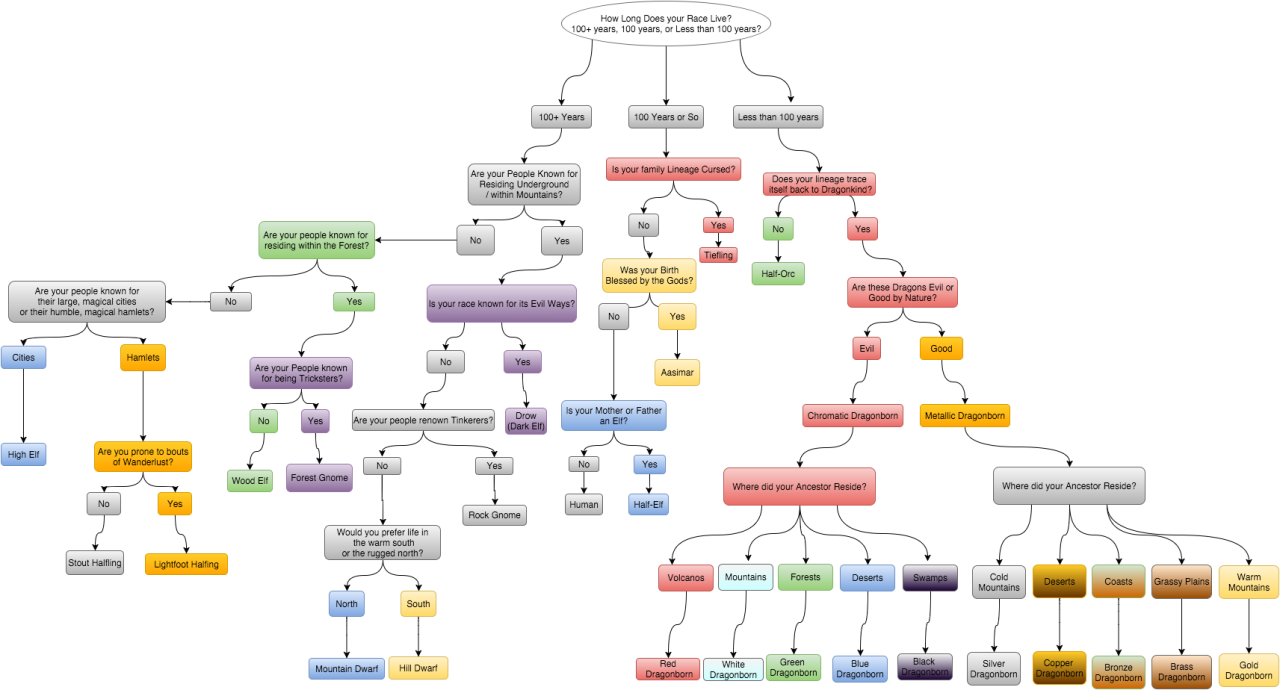 |
| Dicebound, on Tumblr And for the record, good and evil aren't ingrained into race. |
Roll 3d6 5 times and record the numbers. If the total is above 50, you may reroll all stats. You choose where the numbers are placed. Low numbers are good.
- Constitution: Determines your endurance and Corruption. Subtract your Con roll from 20, divide that number by 2 (rounding down), and record the result as your Corruption score.
- Dexterity: Determines your unarmored Dodge and initiative.
- Intelligence: Determines how much your mind can hold. Subtract your Int roll from 20 and record that number as your mental inventory slots.
- Strength: Determines physical strength, how much you can carry, and sometimes armored Dodge. Subtract your Strength roll from 20 and record that number as the number of Inventory Slots you have.
- Will: Determines how much Stress you can take and your force of personality. Subtract your Will roll from 20, divide that number by 2 (rounding down), and record that number as your Stress score.
Ability Score Comments:
My system is rollover, not sum 21. This is literally reverse roll under. Low scores are good, make one roll, if you get over your score, you succeed. Crits on 20, crit fails on 1. (More on that later.)
This GLOG is also modifierless. All situational bonuses have been replaced with advantage and disadvantage, or roughly +4 or -4. My reasoning is +/-4 is a significant bonus, and anything smaller than that can be ignored without affecting gameplay too much. Also, bonuses and penalties much larger than 4 are pretty damn large. Any roll shifted by 4 on a d20 is shifted by 20%, which is significant enough for me.
Players choose where their stats go after rolling their class. This is as much chargen metagaming as I'm comfortable with. Yes, ome (an upcoming Mesoamerican GLOG spellcaster) will want a high Int to store more spells, but every other stat is designed to be equally urgent. In short, I've tried to decouple stats from specific character classes as much as possible to make any character possible with most any stats. I'm firmly in the class/race determines character camp and not the "well I have 18 Int (high stats are bad!) so maybe I'm not a wizard" camp. This isn't remotely like AD&D; I don't care. Please address those critiques to another PO box.
I don't have Constitution affect hit points at all. Any damage taken at 0 HP is added to Con and triggers a roll on the Death and Dismemberment table. If your Con ever reaches 20 or above at 0 HP, your character dies. Characters with lower Con are more resilient on death's door and are better at fighting exhaustion and corruption, which I think is enough for one stat to mandate. Hit points are influenced by class - more on that in another post.
I'm actually quite happy with how I managed Dexterity. Dodge is what a player rolls over to avoid getting hit. It's modified by armor. Players also roll over their Dexterity each round to go before the monsters (I've never trucked with Wisdom as an initiative stat). Simple, and yet effective. Obviously waxes and wanes in importance with how much combat my campaign has, but so far it's working.
Intelligence is much less of a "spellcaster only stat" than it used to be, thanks to the excellent mental inventory rules written up at the Library of Attnam. While it still feels like a spellcaster priority, it's also important for non-casters because it limits how many languages and skills you can have. The emphasis is on having mental inventory be as much of a challenge for brain-centric classes as physical inventory is for martial classes.
Speaking of physical inventory, Strength is quite essential for everybody. The average number of muscular inventory slots is 10, and they fill up quickly. I've never liked differentiating between Str and Dex based armor, and I didn't want to discard Strength as an option for armor because Dex should not affect movement in plate. Dodge can be based off of Str, but only if armor is worn. More on that in another post.
Will is the new stat. It's a redo of Charisma, encompassing all what I thought Charisma covered: namely, force of personality. It borrows a bit from Wisdom but I'd like to think the majority of Wisdom (common sense) gets bundled into Int. Will governs mental fortitude (so Will::Int as Con::Str/Dex, which I find appropriate.) This stat is the most swingy - some of my players have cautiously invested their good scores into it to avoid cracking and insanity, while others have made it their worst stat. As my stress rules undergo testing, time will tell if that was a good thing or a mistake. So far, I haven't laid on the stress, but that'll change.
Stress and Corruption:
Every time you experience something beyond the pale, trauma, or are just really tired, Save or gain a point of Stress in a random mental inventory slot. Record each point of Stress with an S by that mental inventory slot. If you place a point of Stress by an occupied mental inventory slot, you have disadvantage when attempting to use whatever’s in the slot. If you ever gain Stress equal to your Stress score, Save with disadvantage against Will or Crack. If you Crack, remove a point of Stress and roll on the table below. If you pass the Save, halve your Stress and roll on the Virtues table below.
If you Crack, after your breakdown, Save versus Will or roll on the Insanities table below. Insanities take up a mental inventory slot until they’re removed, and every time you give in to or suffer from your Insanity, allies who watch it happen gain 1 Stress. If you ever have a number of Insanities equal to your Stress score, you go homicidally insane.
You can remove Stress through telling your story, drinking, doing drugs, relaxing for a day or more, sex, playing games, chatting with friends, praying, bloodletting, really good food, writing, reading, a good night’s sleep, or anything else the DM okays.
You can remove Insanities through psychiatric treatment, magic, or arcane devices.
d8 Cracks:
d8 Virtues:
d20 Insanities:
Every time you fail a Save against a harmful magic spell, a radioactive place/item, or antediluvian, mysterious devices, you gain a point(s) of Corruption. Record this with a C next to a physical inventory slot of your choice. If you ever gain Corruption equal to or above your Corr score, Save versus Con or gain a mutation and 2 points of Stress. (Follow the link and roll on the table.) Mutations take up one physical inventory slot permanently. If you ever gain a number of mutations equal to your Corruption, Save versus Will or go homicidally insane, permanently.
You can remove Corruption (and mutations) through magical treatment, special items, and mysterious rituals. Corruption disappears naturally at a rate of one point a week.
Stress/Corruption Design Notes:
The Stress rules were taken directly from Library of Attnam's post on madness mechanics inspired by Darkest Dungeon. They haven't gotten much testing yet, but they're designed to interact with mental and physical inventory in meaningful ways, making both inventory and Stress/Corruption more tangible, associated mechanics rather than just another thing to track. The inspiration for associating S/C with inventory slots comes from DIY & Dragons's excellent series on resource management. Please please please read those posts. I'll touch on them more when I discuss mental and physical inventory and their contents.
Corruption utilizes Arnold K's mutation table. Eventually I'll write my own. Sometime. I promise. Pinky swear.
Corruption's designed to make magic and eldritch locales a larger threat, and to make gaining mutations more player facing. I want Corruption and Stress to have a creeping sense of inevitability, and for the players to be seeking out solutions for them before the effects hit. I also like corruption better as a damage type than "magic", "eldritch", or "anathema", because that word describes the immediate effects of its damage. It corrupts you. Magic is corrupting.
Stress is supposed to show the non-physical damages of the adventuring life, how grinding terror and periodic adrenaline rushes accelerate the gradual erosion of self and sanity. Large dungeons will stress you out, and they will drive you insane if you stay in them long enough.
Mutations and Insanities are supposed to be mostly permanent character baggage. They both cut off inventory slots, thereby depriving players of resources. They both affect roleplaying and how a character is mechanically utilized. My tieflings roll a random beneficial mutation, and one player's spider legs have made a lot of difference.
Players choose where their stats go after rolling their class. This is as much chargen metagaming as I'm comfortable with. Yes, ome (an upcoming Mesoamerican GLOG spellcaster) will want a high Int to store more spells, but every other stat is designed to be equally urgent. In short, I've tried to decouple stats from specific character classes as much as possible to make any character possible with most any stats. I'm firmly in the class/race determines character camp and not the "well I have 18 Int (high stats are bad!) so maybe I'm not a wizard" camp. This isn't remotely like AD&D; I don't care. Please address those critiques to another PO box.
I don't have Constitution affect hit points at all. Any damage taken at 0 HP is added to Con and triggers a roll on the Death and Dismemberment table. If your Con ever reaches 20 or above at 0 HP, your character dies. Characters with lower Con are more resilient on death's door and are better at fighting exhaustion and corruption, which I think is enough for one stat to mandate. Hit points are influenced by class - more on that in another post.
I'm actually quite happy with how I managed Dexterity. Dodge is what a player rolls over to avoid getting hit. It's modified by armor. Players also roll over their Dexterity each round to go before the monsters (I've never trucked with Wisdom as an initiative stat). Simple, and yet effective. Obviously waxes and wanes in importance with how much combat my campaign has, but so far it's working.
Intelligence is much less of a "spellcaster only stat" than it used to be, thanks to the excellent mental inventory rules written up at the Library of Attnam. While it still feels like a spellcaster priority, it's also important for non-casters because it limits how many languages and skills you can have. The emphasis is on having mental inventory be as much of a challenge for brain-centric classes as physical inventory is for martial classes.
Speaking of physical inventory, Strength is quite essential for everybody. The average number of muscular inventory slots is 10, and they fill up quickly. I've never liked differentiating between Str and Dex based armor, and I didn't want to discard Strength as an option for armor because Dex should not affect movement in plate. Dodge can be based off of Str, but only if armor is worn. More on that in another post.
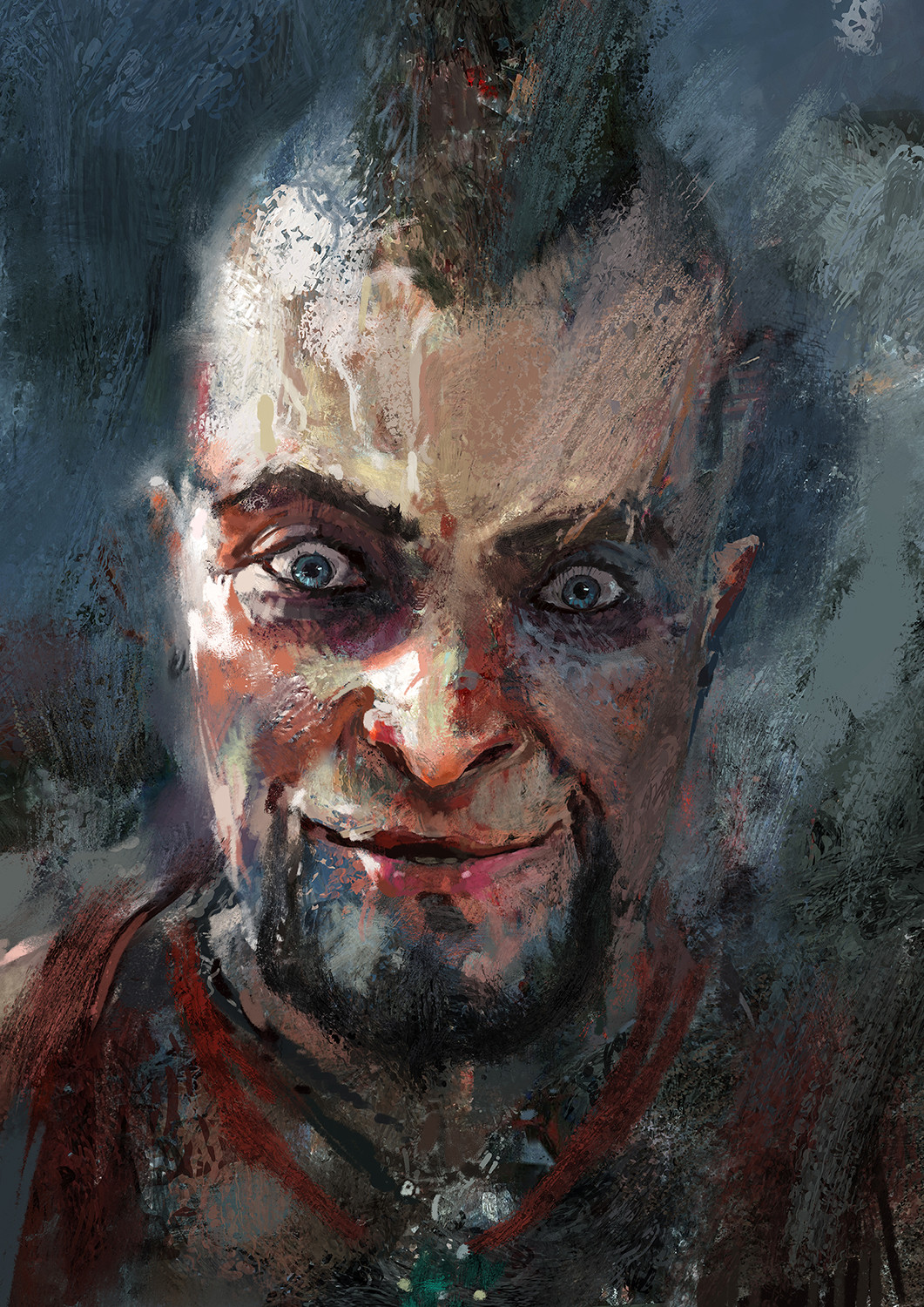
Will is the new stat. It's a redo of Charisma, encompassing all what I thought Charisma covered: namely, force of personality. It borrows a bit from Wisdom but I'd like to think the majority of Wisdom (common sense) gets bundled into Int. Will governs mental fortitude (so Will::Int as Con::Str/Dex, which I find appropriate.) This stat is the most swingy - some of my players have cautiously invested their good scores into it to avoid cracking and insanity, while others have made it their worst stat. As my stress rules undergo testing, time will tell if that was a good thing or a mistake. So far, I haven't laid on the stress, but that'll change.
 |
| Kobe Sek |
Stress and Corruption:
Every time you experience something beyond the pale, trauma, or are just really tired, Save or gain a point of Stress in a random mental inventory slot. Record each point of Stress with an S by that mental inventory slot. If you place a point of Stress by an occupied mental inventory slot, you have disadvantage when attempting to use whatever’s in the slot. If you ever gain Stress equal to your Stress score, Save with disadvantage against Will or Crack. If you Crack, remove a point of Stress and roll on the table below. If you pass the Save, halve your Stress and roll on the Virtues table below.
If you Crack, after your breakdown, Save versus Will or roll on the Insanities table below. Insanities take up a mental inventory slot until they’re removed, and every time you give in to or suffer from your Insanity, allies who watch it happen gain 1 Stress. If you ever have a number of Insanities equal to your Stress score, you go homicidally insane.
You can remove Stress through telling your story, drinking, doing drugs, relaxing for a day or more, sex, playing games, chatting with friends, praying, bloodletting, really good food, writing, reading, a good night’s sleep, or anything else the DM okays.
You can remove Insanities through psychiatric treatment, magic, or arcane devices.
d8 Cracks:
- Abusive: Why aren't they pulling their weight? For 1d6 rounds when an ally fails an action, they take 1 Stress as you scream obscenities at them.
- Blackout: You faint for 1d6 rounds. You can be slapped awake.
- Breakdown: You cannot see for tears, nor speak through a sudden stutter. Lasts 1d6 rounds.
- Fight-or-Flight: For 1d6 rounds, you either viciously attack the source of Stress, or run away. Your choice.
- Hopeless: All is lost. Your despair makes all allies roll with disadvantage for the next round.
- Nausea: You gag or vomit for a round, and cannot benefit from Lunch today.
- Scream: AAAAAAAAAAAAA for a round. If anyone didn't know you are here, they will now. May provoke a Random Encounter.
- Shock: What's happening? Save vs Will once per round, until you succeed you can take no actions.
- Berserk. (Only ashanti unless otherwise noted.) You fly into an insane rage and attempt to kill everything you can see for 1d6 rounds.
d8 Virtues:
- Confidence: You will prevail. You deal +1 damage until the end of the encounter.
- Courage: There is nothing to fear but fear itself. You are immune to fear and Stress until the end of the encounter.
- Focused: Suddenly, a moment of inner peace. You have advantage on your next roll.
- Inspiring: Your unwavering resolve emboldens your allies. They may all roll a new Save against one of their current afflictions.
- Invincible: You must persevere. You postpone death from Wounds and all Insanity effects until the end of the encounter.
- Selfless: You are all in this together. You may redirect an attack from an ally to yourself until the end of the encounter.
- Stalwart: None shall pass. You cannot be moved, knocked prone or tripped until the end of the encounter.
- Vigorous: You feel more alive than ever before. Heal 1d6 HP.
d20 Insanities:
- Addiction: You need your fix to get through the day. If you don't get your drug, you automatically Crack every time you gain Stress, in addition to any withdrawal effects.
- Amnesia: Roll d10 on your mental inventory and lose whatever is in the slot you rolled. If you roll an empty slot, that slot is permanently filled with Brain Damage.
- Anxiety: You are a nervous wreck. You have disadvantage on Saves vs Fear and all fear effects have double duration for you.
- Catatonic: You are completely unresponsive until you can be brought back to town and nursed back to your senses over an extended rest.
- Delusion: Roll d6: 1) You are the long-lost heir of the throne. 2) You can fly. 3) You will burn in sunlight. 4) You are of a different race / an animal. 5) You are invincible. 6) All magic is inherently bad. You cannot be convinced otherwise and rationalise any evidence as an illusion, trick, or any barely believable "explanation".
- Depression: Every day is a struggle. Roll with disadvantage until the first time you succeed on a roll in a given day.
- Hallucinations: The GM might sometimes describe something incorrectly or in a misleading way to you.
- Insight: When encountering a thing beyond human comprehension, you have a 50% chance of gaining a useful piece of information, and a 50% chance of trying to claw your eyes out, taking 1d6 damage and blinding yourself for 1d6 rounds.
- Minor Compulsion: Once per day when the GM calls for it, you must stop everything else to satisfy your compulsion (wash your hands, count your money, vandalise something). Good roleplaying of the compulsion should prevent the GM from using this at too troublesome times.
- Major Compulsion: Once per week when the GM calls for it, you must stop everything else to satisfy your compulsion (kleptomania, necrophilia, cannibalism). Good roleplaying of the compulsion should prevent the GM from using this at too troublesome times.
- Nightmares: Save each night or wake up screaming, gaining only half the effects of rest. Alcohol or opiates may grant you serene sleep.
- Obsession: You become obsessed with a random person and start following them around. You "love" them. If you don't see them for a day, you automatically Crack every time you gain Stress.
- Paranoia: No one counts as an ally to you. You must Save to accept aid or work in a team.
- Phobia: You have a phobia based on what caused this insanity (or roll a random one if this does not make sense). Gain 1 Stress when you encounter something that triggers your phobia.
- Quirks: You have personality quirks. Severe ones. Roll d8: You 1) talk to yourself, 2) laugh wildly and inappropriately, 3) constantly fidget, 4) eat odd substances, 5) mimic those around you, 6) have irritating tics, 7) stutter, 8) suffer tremors. You take a penalty to Reaction rolls and social checks equal to current Stress.
- Sadism: You are brutal and violent. Every time you kill a creature, everyone in sight takes 1 Stress as you revel in the suffering.
- Schizophrenia: Make a new character sheet with a different class, but the same name, race, attributes etc. Each session, alternate between these two character sheets.
- Self-Mutilation: Every time you would take Stress, you can instead take 1d6 damage. If you take no damage for a whole day, you must hurt yourself for 1d6 damage. You are covered in scars.
- Submission: You are seriously aroused by being ordered around. You must Save not to follow a command and may want to seek out someone who will abuse you and treat you like their slave.
- Veracity: Every time you deliberately lie, Save or faint.
 |
| Chris Bourassa, from Darkest Dungeon |
Every time you fail a Save against a harmful magic spell, a radioactive place/item, or antediluvian, mysterious devices, you gain a point(s) of Corruption. Record this with a C next to a physical inventory slot of your choice. If you ever gain Corruption equal to or above your Corr score, Save versus Con or gain a mutation and 2 points of Stress. (Follow the link and roll on the table.) Mutations take up one physical inventory slot permanently. If you ever gain a number of mutations equal to your Corruption, Save versus Will or go homicidally insane, permanently.
You can remove Corruption (and mutations) through magical treatment, special items, and mysterious rituals. Corruption disappears naturally at a rate of one point a week.
Stress/Corruption Design Notes:
The Stress rules were taken directly from Library of Attnam's post on madness mechanics inspired by Darkest Dungeon. They haven't gotten much testing yet, but they're designed to interact with mental and physical inventory in meaningful ways, making both inventory and Stress/Corruption more tangible, associated mechanics rather than just another thing to track. The inspiration for associating S/C with inventory slots comes from DIY & Dragons's excellent series on resource management. Please please please read those posts. I'll touch on them more when I discuss mental and physical inventory and their contents.
Corruption utilizes Arnold K's mutation table. Eventually I'll write my own. Sometime. I promise. Pinky swear.
Corruption's designed to make magic and eldritch locales a larger threat, and to make gaining mutations more player facing. I want Corruption and Stress to have a creeping sense of inevitability, and for the players to be seeking out solutions for them before the effects hit. I also like corruption better as a damage type than "magic", "eldritch", or "anathema", because that word describes the immediate effects of its damage. It corrupts you. Magic is corrupting.
Stress is supposed to show the non-physical damages of the adventuring life, how grinding terror and periodic adrenaline rushes accelerate the gradual erosion of self and sanity. Large dungeons will stress you out, and they will drive you insane if you stay in them long enough.
Mutations and Insanities are supposed to be mostly permanent character baggage. They both cut off inventory slots, thereby depriving players of resources. They both affect roleplaying and how a character is mechanically utilized. My tieflings roll a random beneficial mutation, and one player's spider legs have made a lot of difference.
These strong negative factors can also be cured back at town/during downtime, making those activities more important. If you emerge from the Spiraling Oubliette of the Plutonium Tecuhtli with four Mutations and two Insanities, you bet your tentacle-ridden ass you're gonna spend that hard earned, slightly radioactive gold on some treatments for your bulging, mucous, saggy armpit that takes up an inventory slot and leaks a highly corrosive fluid when punctured or chafed and is delicious when you lick it.
Stress also disadvantages use of a skill, language, or spell, which can be huge. All the more reason to keep it down and drink the demons back into the closet. Drugs and alcohol can remove Stress so bring along that hip flask and drink after every combat encounter.
Managing when to ask for Stress saves is the most delicate balancing point of these systems. Corruption has pretty hard-coded triggers, but deciding if an event is normally stressful or Stressful has been difficult. I've been softer on my players because this is my first GLOG game, but that's going to change. We haven't had anyone crack yet, but we will soon. And the Stress rules are designed to mimic the Darkest Dungeon mechanics - stress compounds, and it can lead an entire party into a negative death spiral.
Perhaps the most fiddly math in chargen is generating S/C scores.
[Subtract your Con roll from 20, divide that number by 2 (rounding down), and record the result as your Corruption score. Subtract your Will roll from 20, divide that number by 2 (rounding down), and record that number as your Stress score.]
It's not intuitive to any D&D veteran, but it works well as a mechanic. If S/C were simply inverses (20-stat) of Will and Con, I'd need to pile on the Stress and Corruption points to see any physical effects or simply have effects trigger at certain thresholds of S/C. I didn't want to mess with that, so I scaled S/C scores down to make each point feel meaningful without making each one its own stat. If S/C were stats, because they're the inverse of inverse scores, they'd have to be roll-under stats, and that's anathema to a completely roll-over system. Again, it's not elegant math, but as ability scores improve, so do S/C, just more slowly.
More to come on skills, mental/physical inventory, hit points, leveling up, and general class notes. I'm going to unpack my GLOG hack because a lot of design decisions made to create clear, player facing rules can be anything but, and because my GLOG is a very different animal.
Stress also disadvantages use of a skill, language, or spell, which can be huge. All the more reason to keep it down and drink the demons back into the closet. Drugs and alcohol can remove Stress so bring along that hip flask and drink after every combat encounter.
Managing when to ask for Stress saves is the most delicate balancing point of these systems. Corruption has pretty hard-coded triggers, but deciding if an event is normally stressful or Stressful has been difficult. I've been softer on my players because this is my first GLOG game, but that's going to change. We haven't had anyone crack yet, but we will soon. And the Stress rules are designed to mimic the Darkest Dungeon mechanics - stress compounds, and it can lead an entire party into a negative death spiral.
Perhaps the most fiddly math in chargen is generating S/C scores.
[Subtract your Con roll from 20, divide that number by 2 (rounding down), and record the result as your Corruption score. Subtract your Will roll from 20, divide that number by 2 (rounding down), and record that number as your Stress score.]
It's not intuitive to any D&D veteran, but it works well as a mechanic. If S/C were simply inverses (20-stat) of Will and Con, I'd need to pile on the Stress and Corruption points to see any physical effects or simply have effects trigger at certain thresholds of S/C. I didn't want to mess with that, so I scaled S/C scores down to make each point feel meaningful without making each one its own stat. If S/C were stats, because they're the inverse of inverse scores, they'd have to be roll-under stats, and that's anathema to a completely roll-over system. Again, it's not elegant math, but as ability scores improve, so do S/C, just more slowly.
More to come on skills, mental/physical inventory, hit points, leveling up, and general class notes. I'm going to unpack my GLOG hack because a lot of design decisions made to create clear, player facing rules can be anything but, and because my GLOG is a very different animal.