Wednesday, June 19, 2019

GLOG Class: DRUID

If you haven’t already, please read these two posts, then come back.

So you want to be a druid.

Why?

Druids have an elemental opposition to metal, language, and spells. The overwhelming majority of classes deal with those three. Druids set themselves against the concept of concept, the arching spires of cities, the parched, mellow scent of illuminated tomes. They fascinate specifically because they cannot be described, because we will never understand why they conduct mighty wars against zondervozes and civilization.

Ours is a bloodless, cool understanding, born of schools, letters, and math. We can conceive of the concept of druidism, and that is what damns us, because we know of no other way to elucidate understanding except through concepts. We can never understand the thirst quenched by fresh blood, the sticky, buttery flavor of wolf marrow roasted by wildfire, the pleasure in a packmate’s warmth while tucked away in a small burrow dug under fresh snow.

To understand druids more fully, we can turn to philosophy. There is a curious parallel in the pinnacle of symbolic thought and the utter depths of druidism, a concordance at the point where everything and yet nothing is understood.

A sign, as we think of it, is composed of three parts: a sign-vehicle, an object, and the interpretant. The sign-vehicle is the object which we see: smoke, a pedestrian crossing sign, four letters that spell rose. The object is the thing signified by the sign-vehicle: fire, people cross the street here, a flower. The interpretant is the connection between the sign-vehicle and the object, the translation which allows us to understand what the sign-vehicle is saying.

The following statement is to be treated as a metaphor and not fact, for one cannot describe nega-philosophy with philosophical terms.

Druids have no need for sign-vehicles. For druids, there is only the interpretant and object, intertwined. Understanding the existence of a molehill and what it means are the same thing. There is no ambiguity in the interpretation of natural signs.

This is why druids are excellent trackers and why they can tell at the very first opportunity if civilized people have intruded into druidic territory. Archdruids can even detect the skunky stench of wizard magic, and smell the faecal musk of philosophy.

This is also how druids can have absolutely no idea how a street works and get killed by traffic. Though druids rarely venture into cities anyway.

Druids are not limited to this natural knowledge, either, because druidism is not a casting off of knowledge (it’s very hard to forget things) but rather an accumulation of itself that gradually overwrites all unnatural impulses. This is why druids can venture into a city and claim asylum from unnatural horrors infesting their forest, and why some druids operate openly in civilized areas, because they understand how to work in the grey areas of the law. And yes, these druids are damned, but when the cities fall, there will be no need for literacy or concealment.

This unique universalism of signage druids possess can also extend to other creatures.

When they vocalize their grunts and spit their black spittle, there is no ambiguity of their intent.  They harness some primeval part of our brains, dredging up the cold, unmistakable tonnage of instinct.  They don't need to speak our language or read our minds.  Our intentions are already printed on our face and in our movements.

- Arnold K, from this post.

However, druids have one weakness, and that is the unnatural.

Magic is unnatural, yes, but has rules. If it possesses rules, it can be broken.

No, what druids fear, what we all fear, is the intrinsic corruption of what is real. The unperceivable other manifesting as tangible perversion, as madness and howling through blood-drenched nebulae and stars with thin, lisping cilia that whisper things beyond our ken.

Soft, warm things with sucking fur look at us with inverted eyes and chew on their intestines, suckling the fluid of reality from their wounds, fattening, growing mandibles and muscles that can vocalize in our aural range, preparing to enter our world, ambassadors of the end of days.

Because druids are nature, they have no defense against its fundamental perversion. This has led to the only real schism between druids, with some believing that civilization can at least seal these wounds, and some holding that civilization causes them. And schism is also unnatural, so all druids feel this pain (except for archdruids). It lodges like a splinter, and festers in parts of the brain not locked away yet.

You wish to play something set against civilization and the very concept of itself?

Excellent. Kill me, and ascend.
Biagio D'Alessandro


GLOG Class: Druid

Offered up with fresh deer kidneys and happiness to Spwack, Lexi, and Madilynn, all of whom joined me in gorging on the carcass of proofing.

A: +1 Nature Dice, +3 Symbolism Dice, Biome, First Biome Commune
B: First Biome Union, Second Biome Commune
C: Second Biome Union, Third Biome Commune
Ø: Archdruid

Your Nature Dice is your d4 “spellcasting” dice. It never expires and will never abandon you unless you gain any other sort of spellcasting dice. (wizard, bard, warlock, sorcerer, etc) When you use your ND to affect natural things, roll your ND plus all of your Symbolism Dice and consult the relevant table to determine the power and duration of the generated effect.
Please note that these ND effects are not “magical” in nature, are therefore not affected by antimagic fields, can only be produced by manipulating natural (e.g, non-magical and unrefined) substances, and cannot be “unnatural” effects. For example, a heart attack or encouraging someone’s skin fungus to grow overwhelmingly is a natural effect. So are roots strangling a person. Mutations and people turning into trees are not natural effects.
You may only have one ND effect active at any given time.

For damaging effects consult the following table:

X damage/Y rounds is equivalent to X damage per round for Y rounds.

1: Up to 20 damage/1 round
2: Up to 8 damage/2 rounds
3: Up to 4 damage/3 rounds
4: Up to 4 damage/2 rounds
5-7: Up to 2 damage/3 rounds
8-10: Up to 1 damage/4 rounds

For effects that change natural things rather than damage, please consult the following table:

X size/Y distance is equivalent to affecting a thing of X size or less around Y distance away.

1: Redwood size/line of sight
2: Whale size/pond distance
3: Elephant size/whale body distance
4: Horse size/crocodile body distance
5-7: Dog size/human body distance
8-10: Bunny size/armspan distance

Your Symbolism Dice are what hold you back from the true power of druidism. They are d4’s, and represent your attachment to filthy things like cooked meat, math, and language. Whenever you roll doubles while using your ND, remove any SD’s that show the doubles. Whenever you roll triples while using your ND, remove an SD permanently. If you roll quadruples, remove one SD permanently and remove all SD from the ND’s effect. If you roll two doubles, remove all SD’s that form a pair with another dice.

The permanently removed SD have character effects:

  • The first SD lost is metacognition and the like. Things like philosophy, complex math, metaphorical devices, and any arcane and scientific knowledge are now alien to you. 
  • The second SD lost is language and math. You can no longer conceive of counting or speaking, but you may communicate perfectly well nonverbally.
  • The third and last SD lost is symbolic thought itself. A rose is a rose, nothing more or less. To lose this SD, you must embark on a long spiritual journey involving lethal hallucinogens, fire, fasting, and ritual combat with a powerful animal. If you succeed, you become unfettered from all the chains that previously bound you to civilization. If you fail, you will be killed and eaten.

Your Biome is where your first forged your link with nature. You will gain different communes and unions based on its climate and ecology and a perk unique to that biome.

Example Biomes:

Fungal Grove:
Perk: You can cause any sort of fungus or slime mold or mold that you’ve eaten to spontaneously grow over a duration that you set by touching a surface.
First Commune: Fungi
First Union, Second Commune: Fungi, Flora
Second Union, Third Commune: Flora, Water

Rain Forest:
Perk: You can replicate any sort of natural noise you've heard at a volume of your choice coming from an area you can see for an indefinite duration.
First Commune: Fauna
First Union, Second Commune: Fauna, Flora
Second Union, Third Commune: Flora, Earth

Desert:
Perk: You can survive on nothing but sunlight if necessary.
First Commune: Water
First Union, Second Commune: Earth, Wind
Second Union, Third Commune: Wind, Flora

Tundra:
Perk: When you are viewed against a heavy background of snow, rain, or fog, you are invisible to sentient creatures.
First Commune: Fauna
First Union, Second Commune: Fauna, Wind
Second Union, Third Commune: Wind, Flora

Chaparral:
Perk: You can superheat the moisture in living plant matter by touching it. The longer you maintain contact, the hotter it becomes.
First Commune: Flora
First Union, Second Commune: Flora, Fire
Second Union, Third Commune: Fire, Wind

Bog:
Perk: You can hibernate under a thick layer of soil for up to 100 years.
First Commune: Flora
First Union, Second Commune: Flora, Earth
Second Union, Third Commune: Earth, Water

Huitatlauhco (Lightning Canyon):
Perk: You can ground lightning strikes without any danger to yourself.
First Commune: Wind
First Union, Second Commune: Water, Lightning
Second Union, Third Commune: Lightning, Water

Communes are your ability to communicate with the various natural forces, being flora, fauna, fungi, those in-between creatures, earth, wind, water, fire, and lightning. When you commune, you may choose to either initiate a conversation of sorts with the selected biota/force or view the world through the biota/force’s perspective.

Senses for all biota and elements:

Fauna: Taste, touch, sight, smell, hearing, space
Flora: Touch, sound, light patterns, space, growth patterns, soil nutrients
Fungi: Touch, vibrations, nutrients, space, light patterns, growth patterns

Fire: Vibrations, light, growth patterns, flammability, space
Water: Space, sound, displacement, dissolved material, boundaries, temperature
Wind: Space, sound, distance, passengers, weather
Earth: Vibrations, hollow spaces, differentiated material, displacement, liquid content
Lightning: Conductivity, objects near point of contact, magnetism, object resistance, electric rhythms/biorhythms

When using an ND to commune with different creatures, consult the following table:

X duration/Y senses/Z distance represents communing with a creature/natural force of up to X duration utilizing up to Y of its senses at Z distance.

1: Any duration/all senses/any natural thing you’ve touched
2: 1 day/4 senses/any natural thing you’ve touched in your current biome
3: 1 hour/3 senses/any natural thing touched within 2 miles
4: 10 minutes/2 senses/any natural thing touched within 1 mile
5-7: 1 minute/2 senses/line of sight
8-10: 3 rounds/1 sense/touching within line of sight

Unions represent your ability to become one with the forces of nature and shapechange into either a creature or a natural force. Your physical characteristics, including HP, Str, Con, and Dex, may change while you unite. If you are reduced to 0 HP or less while uniting, Save versus your character’s Con. On a success, you change back into your normal form with the HP you had before you transformed. On a failure, you change back into your normal form and keep your current HP.
You may only unite as a biotal (flora/fauna/fungi) that you’ve either shared a meal with or killed and eaten. To transform into an elemental form, you must be reduced to 0 HP directly by that element and survive.

The duration and power of your union is represented by the following table:

X HD/Y rounds/Z damage represents transforming into a form of up to X HD for up to Y measures of time. Z damage only applies when dealing direct damage in elemental forms. One can only transform into elemental forms on certain better rolls.

1: 4 HD/1 day/10 damage
2: 3 HD/1 hour/6 damage
3: 2 HD/10 minutes/3 damage
4: 1 HD/5 minutes
5-7: 1 HD/1 minute
8-10: 1 HP/6 rounds
Ricardo Padierne


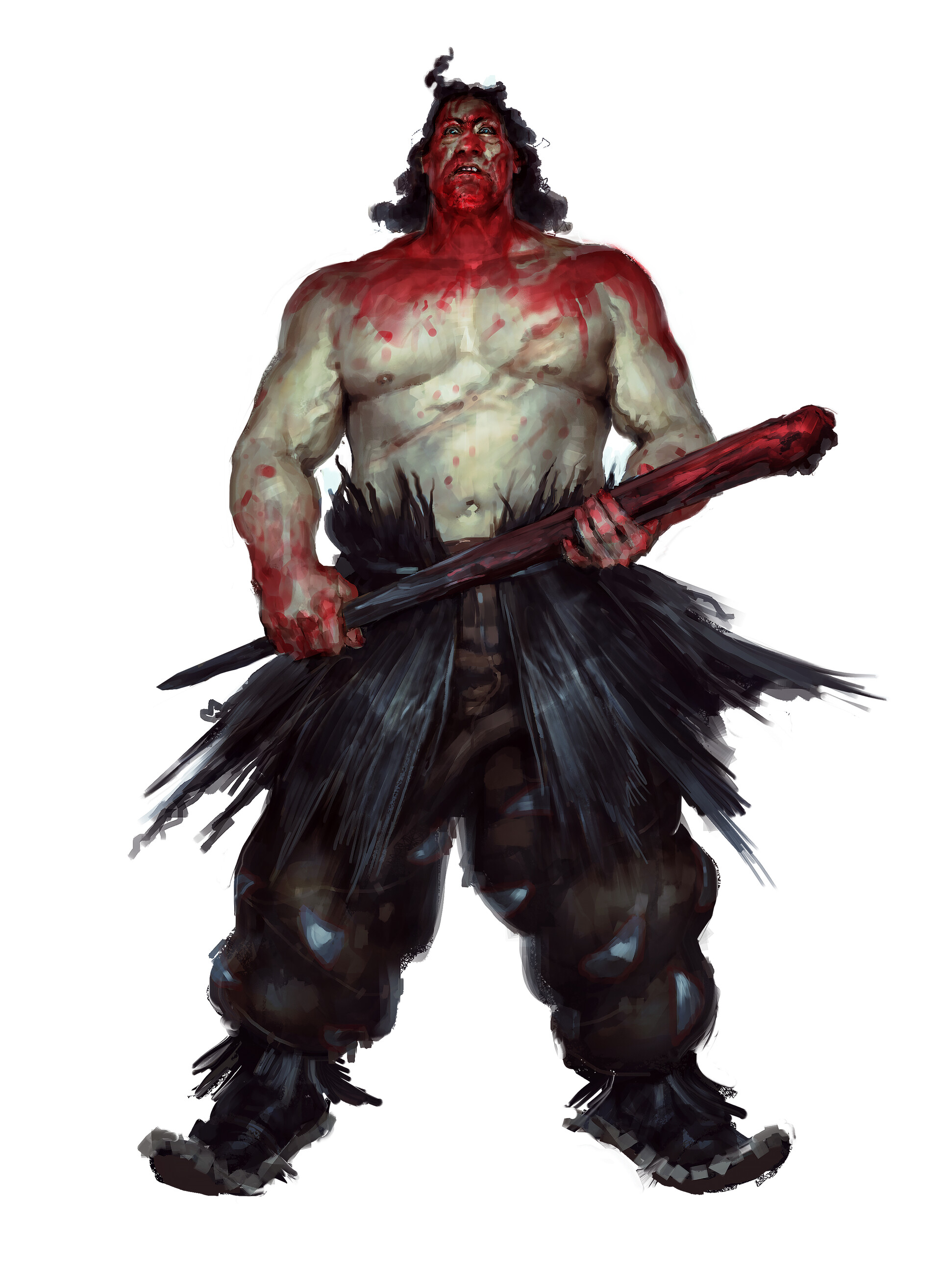
Archdruids are creatures beyond mortal ken. They can be killed (all natural things can be killed) but they cannot die of old age or natural disease. The best thing to kill an avatar of nature is another avatar of nature, or an artillery shell.
Archdruids differ from regular druids in that they can deal damage to creatures based on symbolism and higher thought. They can cause cancers and heart attacks, yes, but they can also give wizards aneurysms using the wizard’s MD as damage or cause a creature to forget what words are. These are the most imminent of their tools, though, because what has more power - a burst appendix or a glacier?
Archdruids can commune with any natural thing, and may compel any creature they commune with to obey them. They still must follow the requirements for unions, though.
You can only become an archdruid by killing one. If you have any SD left and attempt to challenge them, they will rot you from within.

Design Notes:
Well, this was a class a long time in the making. I worried at the negative spell dice casting mechanic for weeks, and thanks to Spwack, finally pinned down some averages based off Python that gave me a framework of sorts to finally kludge the abilities around.
I used a negative casting mechanic because I feel that the central conceit of the druid is self-imposed limits rather than the “well, you’re going to explode eventually” take of GLOG wizards and similar casters, and based said mechanic off of d4’s for two reasons: to give players a way to mechanically progress without having to level up and to make doubles and triples more frequent.
The first glance I had at this was with d6’s, which change the tables math and frequency of doubles but most importantly dramatically lower the prevalence of triples. My fix for that was simple: remove one SD per template gained, which might work well for another sort of negative casting class, but not druids, which I wanted to have a more natural progression based around using central abilities.
The usage tables are completely untested. The power scaling for abilities will be adjusted, thankfully, I have a druid player in my campaign already. The effect of these abilities is limited by the creativity/flexibility of the person using them, so I encourage you to modify these tables as necessary to suit your players.
This class will require a lot of rulings to be made. I encourage DM’s to adjudicate each situation as its own as opposed to slowly building up an “acceptable” framework of usage via stare decisis. (Of course, I’ll probably be disobeying this principle myself occasionally. Rulings not rules.) The reason why? Druids thrive on adaptation, and while guidelines to their power usage would make the class a bit more intuitive, it’s not supposed to be. Druids are a very different psychological construct to play, and have no set code of conduct, like the animals they strive to emulate. Putting yourself in the “purge the city, live the instinct” state of mind is, to me, part of the fun of playing the druid.
The biggest source of conflict I foresee is the debate on what is “natural”. Depending on what rules your campaign world has, if any, “natural” could be a definition only accessible to the DM. I’d encourage any DM’s running this druid to take them aside and enlighten them on any “natural” parts of their campaign world that conflict with common sense.
I’m not remotely a scientist of any sort, so my take on the various “senses” of biota and mineral conglomerates/energy forms could benefit from some enlightenment. I hope that each different thing offers enough options to make it a viable source to commune with, even lightning.
Archdruids aren’t intended to have many limits. They’re going to be the most powerful mortal casters in both the short and long run in my setting. If you want wizards to be more powerful in the short or long run, I’d tune down the lowest results on the ND tables. Archdruids are also able to do more or less whatever they want, only limited by other archdruids or challengers. They don’t have much reason to cooperate with non-druid parties and might be best suited as NPC’s or questgivers, depending on your campaign.
Biomes are flexible and don’t have hard lines unless you’re running a hexcrawl. They’re more for flavor than actual mechanical utility.Take a tundra druid into a desert, though.
I’m most proud of how I executed the concept I had of this class. It’s my favorite finished project so far.

Wednesday, May 22, 2019

GLOG Class: Thief

You grew up lacking something. Parents, a home, a conscience, something to do, restraint. Any or all of those.

There’s no hole inside you. And even if there were, you’ve filled it with excitement.

Right?

Mathieu Latour-Duhaime

GLOG Class: Thief


Changelog: 6/2: Added examples to an Eye for Detail.

A:The Heist*, Hidden Pockets, Fast Hands (Syndicate vs. Freelancer)^
B: Eye for Detail, Wall Crawling**, Unlabeled Package*
C: Tricky**, Scrounge**
D: Great Escape*, Opportunist*

* are sourced from Skerples’s Thief.
** are sourced from Type1Ninja’s Thief.
^ not core feature but discussed below the core features.

The Heist is the core of your being, the thrill of the hunt. Once per adventure or dungeon or campaign arc, you can gain 10% bonus XP for any one valuable item you personally stole. It has to pass through your hands, or you have to be the one masterminding the theft. Unguarded or abandoned treasure does not count (unless there are traps). For example, a gem worth 1,000gp would give you 100 extra XP. If the bonus XP would cause you to gain a level, you instead gain the exact amount needed to gain the level.

You’ve got Hidden Pockets on your person. You can mark a number of items equal to your Thief templates hidden. Unless your apparel, body, and armor is very thoroughly searched, these items won’t be found. The items hidden must be small enough to fit in your mouth.

Your Fast Hands help keep you alive. You gain an extra Fast inventory slot for each Thief template you have.

Your Eye for Detail helps you find things others overlook. You can spot additional details when searching or peeking or gain insight into the meaning of a detail.

1d6 extra details:

  1. Marks of recent activity involving item/area
  2. Item/area’s history
  3. Use of item/area
  4. Past users of item/area
  5. Traces of a substance (liquid, powder) on an item/area
  6. Item/area partway through an action


Wall Crawling is a necessary habit. You climb just as well without climbing gear as with it, and if a climb would be impossible using gear, you can roll anyway.

In town, you may spend any amount of money to buy an Unlabeled Package. When the package is unwrapped, you declare what it contains, as long as the contents comprise the appropriate number of Inventory Slots, don’t cost more than you originally paid, and are available in town. You can put multiple items inside a large Unlabeled Package, including smaller Unlabeled Packages. You can have no more than two Unlabeled Packages at a time.

You’re a Tricky combatant, as such, you roll with advantage when attempting Stunts.

Scrounge for useful things. Once per session, when you dig through trash or refuse, you can get an item rolled on the starting item table.

Once per day, you can automatically pull off a Great Escape from something that is restraining you and that you could plausibly escape from. This includes grapples, lynchings, and awkward social situations, but not sealed coffins or forcecages.

Be an Opportunist! Take advantage of situational bonuses to (surprise, elevation, etc) to deal an additional +1d6 damage on a nonmagical attack, provided you hit.

Syndicates versus Freelancers:
I didn’t include this in the core thief but I do think it’s an important part of thievery, and I’ll be using it in my own personal game.

Syndicated thieves enjoy a certain amount of protection, patronage, and equipment in exchange for 30-60% of their earnings per month. These rates can be negotiated, of course. Syndicates also act as contractors for thievery and similar endeavors, providing a somewhat steady source of employment and fences for objects. If a thief is caught or seen, a syndicate can bribe officers, eliminate witnesses, extract thieves, destroy records, or other such things. This aid depends on how much the thief pays the syndicate and how useful the syndicate perceives the thief to be. Some jobs are smokework, and if a thief gets caught on a smokework job, they’re expected to off themselves or be eliminated.

Freelancing thieves enjoy none of these benefits but keep 100% of their earnings. They can potentially build their own network or even their own syndicate but must be wary of competition from other syndicates or thieves. If a freelancer is attracting contracts away from syndicates, they may face recruitment offers, have an assassin sent after them, or have a bounty put on their head.

Basically, it’s a safety net versus faster leveling. The existence of syndicates also depends on the level of civilization in your setting, too.

Design Notes:
Well, I don’t believe in class triads. I do believe in the importance of sneaky stealy classes though. The feature that aggrieves me the most is Eye for Detail.
I struggled between giving thieves a Second Chance to see things or disarm traps or more information via Eye for Detail. I opted for more information but that means something else important: if the thief gets more information, they have an edge. This is right and good. Fighters get more attacks, wizards get more spells that summon killer ramen.
However, I don’t think thieves shouldn’t have a monopoly on information. All the clues necessary to solve the puzzle (including traps and maybe negotiations) need to be available to a party regardless of the number of thieves or quality of thieves the party has. I’m not going to lock information behind a successful roll if the party has been scouting/researching appropriately.
What is the utility of Eye for Detail, then, if all the information should be theoretically present to a party of veterans or druids?
Well, I see two options. The first is additional details that aren’t necessary to solve the puzzle/trap/social interaction but provide additional context. The second is an understanding of what the details mean. I’m sure there are other ways to use this, and I hope your thieves discover more ways.
This class will have some cross-pollination with the Assassin and possibly the Inquisitor. All three (Thief, Assassin, Inquisitor) do rely on a certain amount of subterfuge to accomplish their goals. Those goals will likely be very different, though.
This class will be a part of Who Fights Monsters, my in progress GLOG hack.

Sunday, May 19, 2019

And If You Think They Pay Students To Do This You'd Be Wrong

"Wizard schools are hotbeds of hobbies injurious to humanoid health, souls, and minds. And that's not even including the annual Flavortown cookoff, sponsored by the Monster Menu-All, your guide to underground edibles."

 - Asmodeus's Guide to Higher Education

"There must be a way to channel the energies of students into more productive, cooperative, and less rowdy disciplines. Wizard duels are too tightly regulated and boring for these new generations, what with these illegal seconds, thirds, fourths, and contingency spells."

- An excerpt from a memo High Magi Acererak wrote to the Hon. Smaug regarding wizardly spats

From the undoubtedly imbalanced minds of the Oblidisideryptch and the Velexiraptor (whose teams can be found here):

FIREBALL
A game of skill, luck, and informed cheating

Do you wish to contest this ruling, mortal?

Fireball is played between 2 teams of 4 players. At least one player on each team must be able to cast Fireball (or an equivalent spell that creates a ball of fire), and every team member must be able to interact with Fireballs in a way besides becoming seriously injured by them.

The game has 4 15-minute halves, separated by short rests for players to recover HP, strenuous abilities, and dunk their heads in Wyvernade.

A Fireball pitch is just long enough for long-ranged spells (like, for instance, Fireball) to make it halfway (~200', or 60 metres); a goalpost is located at each end.

Teams get one point for each Fireball spell that hits the opponent's goalpost; if it volleys off of 2 or more players besides the caster, it counts for 3 points instead.

There's a laundry list of what counts as a fireball, what counts as a player, what's allowed re. magic items, extradimensional interference, necromancy, time travel, etc. These (and other) rules are enforced by three referees, all loaded up with powerful movement, divination, and abjuration spells.

Gameplay Rules:
Player locations are demarcated by which Zone they're in. You're either on Home Side, Midfield, Away Side, or in Home/Away Goal (only one player is allowed to be seen in each goal at all times)

Home Goal | Home Field | Midfield | Away Field | Away Goal

At the beginning of the quarter, fill a bag with chits, one per player. Teams can set up their players anywhere from Midfield to their own Goal. Determine starting player by drawing from bag (without replacement). On a player's turn, they can move one zone and take one other action (casting a spell, punching someone, trash-talking...). If you move into a zone with an opponent in it, you may move to Cover them, so you can more easily Intercept their spells. If you move while Covered, whoever is Covering you can opposed DEX test to move with you and keep Covering you. If you move while undefended, anyone in the same zone can make a DEX test to catch up with you. If they do, they can Cover you.

To throw a Fireball (or another similar spell), make an INT or DEX test. Fireballs can go up to one zone away. Anyone in the same zone as the caster can try to Intercept by beating your INT/DEX test result with another INT/DEX test; if they succeed at Intercepting, initiative moves to them and they can interact with the Fireball; if multiple players try to Intercept then the highest roll wins. Anyone Covering the caster gets to Intercept as well, and goes first no matter what if they succeed.

If you can handle a Fireball with your bare hands (with a Shape/Control Fire spell, or by being magically fireproof), you can carry Fireballs while moving and hand them off to other players. Only players covering you or your target can try to Intercept the handoff.

If the Fireball makes it to its target:
    Target is an undefended goal: Score points equal to the Fireball's (dice)! If the Fireball volleyed off of at least 2 Intercepting players, it counts for double points.
    Target is a defended goal: Goalie makes a INT/DEX save to Intercept
    Target is an undefended player: The Fireball passes to the target, who now gets to act
    Target is a defended player: Everyone involved makes a INT/DEX test; whoever wins gets to Intercept   

When multiple Fireballs are in play, resolve them from closest to the Away Goal to closest to the Home Goal (this is Home Field Advantage)

If there are no Fireballs in play, next player is determined by drawing a chit; once the bag is empty, the Quarter ends.

The National Conclave for Arcane Athletics (NCAA)

8 of the 16 NCAA teams follow below.

The Balthifore Oracles:
Balthifore will have an excellent sense of timing. Infrastructure upgrades, downsizing before recessions, and generous college programs for obscure fields that suddenly become hotbeds of innovation and wizardly startups has propelled Balthifore University into generous budget surpluses that are quickly allocated towards fruitful initiatives...most of the time. To prevent massive prosecution over potentially illegal foreknowledge, the university also pours large sums of money into stupid and wasteful projects. Like the ongoing construction of the world’s largest Fireball stadium. Every year, a phase is finished, and the inauguration of the new construction phase takes place the next day. The current “stadium” is capable of hosting 4 simultaneous Fireball games and has been the seat of the last 2 finals. Despite their obvious prescient advantage, the Oracles only perform slightly above average...though their team steadily increases in quality from year to year.

Star Player: Pythia Alexandris, an international student famed for her stunning ability to be in the right place at the right time, especially if a game is on the line.

Special Techniques: The players have an eerie sense of coordination, dodging push-foiling maneuvers and adapting to new strategies with disconcerting speed. However, their audacious stratagems occasionally crater at just the wrong moment. At any given time, an Oracle can reroll any Int or Dex test with advantage or disadvantage. However, every time they use this ability, their opponent gains one use as well.

Home Field: The fields are well pruned and maintained, with no exceptional features save one. The massive projecting screen displaying the game has, without fail, displayed 5 random seconds of the upcoming game 5 minutes before the game begins. Attempts to thwart the projected 5 seconds from coming true have resulted in multiple freak coincidences creating the exact events projected.


The B. Smith Undergraduate College For Indigenous Education Thunderbirds:
The BSUCFIET - or “BS U” - to its students - has had a long and controversial history stemming from its establishment on a native burial ground and the culture of nepotism and racism among the college’s traditional administrators, the Smith family. Despite projecting a reputation as an institution where indigenous traditions were studied and preserved orally and in literature, the programs undertaken by faculty have often been deleterious to the cultures they wished to examine, in some cases benefiting companies seeking to profit off of natural resources held by said cultures. Tensions came to a head in the massive student riots 25 years ago that culminated in the college’s current president and deans being held hostage by students. The standoff with local law enforcement has continued since then, and with large numbers of faculty quitting, classes and facilities have become increasingly student and graduate managed. Despite these difficulties, the college has experienced a windfall in investments ever since indigenous representatives gained a majority seat on the college council, leading to a renaissance in cultural studies and overall education with enough money left to field a proper Fireball team.

Star Player: Quanah Parker, the son of a graduate student and a faculty member. Quanah demonstrates a devastating aptitude for weather magic, and frequently uses high pressure lashes of water to his advantage.

Special Techniques: The Thunderbirds have the power of flight, which they use sparingly as it tends to produce undirected discharges of lightning. A Thunderbird can potentially fly over an opposing player, but when they touch the ground again, they discharge a lightning bolt at a random player (Dex test to avoid) that deals 1 dice of damage for every zone traveled in the air.

Home Field: The field’s location is on a desecrated re-consecrated burial ground with massive sinkholes interspersed between stretches of tall, charred plains grass. The Thunderbird itself sleeps in the field’s’ cavernous holes, and occasionally emerges to conjure a torrential rainstorm over a player or a massive team-shifting gust of wind. The field itself harbors an animosity towards visitor teams, and usually curses one or two players before a match’s conclusion.


The Vigilaincie Beholders:
The Vigilaincie Institute of Opthamology is a small, private college seemingly unsuited to support a powerhouse Fireball team. Despite their lack of a home stadium, the Beholders possess unique abilites which gives them a strong edge to any unprepared teams. The players begin the match completely blindfolded, and communicate through a series of whistling and clicking noises of unnatural tone. When they take off the blindfolds, though, their terrifying power becomes clear. The Eyes of the Beholders possess many strange magical abilities maintained through visual acuity - if they can see a target, it can be affected. These powers are usually replicated in lesser form by fans for goofy effects and staring contests during matches.

Star Player: Ghuanadar Eyries, a humanoid of unknown ethnicity. Rumors that Ghuanadar’s entire body is covered in eyes beneath their black jumpsuit are entirely unsubstantiated.

Special Techniques: The Beholders each possess one team eye power - an antimagic stare - and one individual eye power and can “see” up to 2 zones away while blindfolded. When their non-antimagic eye is exposed, they can manifest powers ranging from petrification effects to walls of turf.

Home Field: None. However, the team lugs along large mirror apparatus that they often set up on the field and use to get the drop on players out of their visual range.

The Minneennim Twinned:
Minneennim University is a beacon for studies covering the broad spectrum of visible and invisible effusive radiations. As such, their Fireball team is composed of the most maddening illusionists they can find. The Twinned specialize in infuriating illusions of themselves, fireballs, and opposing players, often allowing for shenanigans right under the referee’s eyes and false “goals” that send the tally-devils into a frothing frenzy. Often, opposing teams will try to sneak in specially enchanted headwear to filter out the false cards.

Star Player: Hannah Tibbit, a graduate student with a penchant for camouflaging herself or enemy players to match their current background. Is suspected to conjure an illusory duplicate while impersonating a referee during home games. Such flagrant violations remain unproven.

Special Techniques: Illusions of fireballs, players, and medusae. Lots of them. Teams usually employ special tics during games to differentiate themselves from their illusory duplicates.

Home Field: The stadium is regular. The field is a box coated with one-way mirrored glass with two holes for exit and egress and mirrored geometric shapes sprinkled through the field. Snowblind glasses are a must for watching or playing a Twinned match.


The [] Mimics:
[] University is the premiere institution for the fine arts of acting and character impersonation with an impressive graduate espionage program. The University takes on the name of whatever team it’s due to play in it’s next Fireball match, leading to no end of legal confusion and temporary differentiated postage until the match is resolved. The players, consequently, are drawn from other teams. I mean, they impersonate players from other teams.

Star Player: Whatever player is popular at the moment, until the winds of change blow.

Special Techniques: Randomly determine team composition based on all sanctioned Fireball teams except the R’yleh [REDACTED] and whatever the opposing team is. Players may make an Int test to impersonate objects like fireballs and goalposts. Impersonating referees is strictly prohibited.

Home Field: The game takes place inside a large, open air wax museum of famous people and famous university graduates wearing Fireball equipment and magically animated to perform simple, harmless, random gestures. The wax will reform slowly if melted. It’s tradition for the Mimics to impersonate 4 random wax figures that are removed from the stadium as the game starts.


The Steer City Beastmasters:
Steer City University boasts one of the largest arcane animal husbandry programs in the world which spans hybridization, bringing extinct ancestors back, researching common arcane ancestry, and unique veterinary certifications. Their players are often talented students who’ve bred and bonded with archetypical beasties - one per player - that accompany them in matches.

Star Player: Bevonia Langhawrne, scion of a long line of ranchers who successfully bred a displacer beast with a cow, creating a 2000-pound beef behemoth named Vobe with fireproofed horns who’s always in a more inconvenient place than his position would suggest.

Special Techniques: The Beastmasters often bring dangerous animal companions onto the field. Pseudohydras and pseudochimeras are quite popular choices for matches, as the hybrid creatures incorporate classical abilities of many other monsters.

Home Field: The stadium is a squat concrete block stained and scarred by many monster emissions over the years. It features lots of hay bales and tasty treats for hungry beasts that will hopefully prove more appetizing than enemy players.


The Paracelsian Primordials
Paracelsus University is an old, renowned center of elemental studies with Colleges of Earth, Wind, Fire, Water, Metal, Wood, Void, Light, etc…..and the hotly contested Heart. The yearly team tends to be composed of leading students from randomly selected colleges. Inter-college rivalries between elements often flare up during matches, resulting in many widespread expulsions of fans from games over the years. Famously, the 5th final ever played didn’t have a winner because several feuding faculty, with the assistance of students, summoned multiple elemental apocalypses on the playing field at the same time. After decades of magical rehabilitation, the stadium was declared “fit to use pending terms and conditions and signing of a release of liability agreement”.

Star Player: Hawea Kekoa, a burly undergrad with many animated tattoos. He carries around a fireproofed surfboard that he always seems to find a use for, whether to swat fireballs or surf crowds.

Special Techniques:
Pyromancers: Can cast a 2 MD fireball with one dice and bend the path of fireballs.
Aeromancers: Can fly and suck the wind from opponents.
Hydromancers: Can extinguish or repel players with water.
Vaccuumancers: Can attract opponents or fireballs into gaping voids torn in reality.
Luxomancers: Can create blinding flashes of light and make hardlight implements.
Timbremancers: Can warp greenery into weapons or fashion lethal plants.
Empathomancers: Can cause opponents to feel the pain they inflict.
There’s an infinite number of mancers!

Home Field: A cracked, pitted wasteland of charred earth, rivers of lava, acid, and molten metal, occasional patches of greenery, and several named geysers that erupt in sync with the small volcano in the middle of the field.


The Lost Angels Radiance:
The Radiant Word Seminary was a small theology college until the Fall of Notre Dame. Surviving faculty and students took refuge in this college, leading several unsuccessful crusades until formally christening the Radiant Word as their new home. With the endorsement of leading clerics and paladins, the Seminary has become a thriving force of light opposite the blackened, crumbling spires of Notre Damned. Their rivalry is one of the most intense in the league. It’s rare a Radiance/Balors game goes by without at least half of each team carried off the field.

Star Player: Joan d’Arch, a living saint dedicated to an eternal crusade against the forces of Go’al. She leads a team of devoted paladins, each ready to martyr themselves to win against the forces of darkness.

Special Techniques: The Radiance are masters of banishment and containment of eldritch and demonic forces alike and possess massive staying power as each player knows how to heal.

Home Field: A consecrated, polished slab of white marble, where harmful enchantments are punished by angelic smites.

Write your own conferences! We'll play some games someday.

Friday, April 5, 2019

GLOG Parasite Challenge: Vine Servant

Normally I’d start with some vague, punchy blurb about DEATH and POWER but this class is not about death and power.

This class is about love, friendship, and caring. Also smells. Good smells.

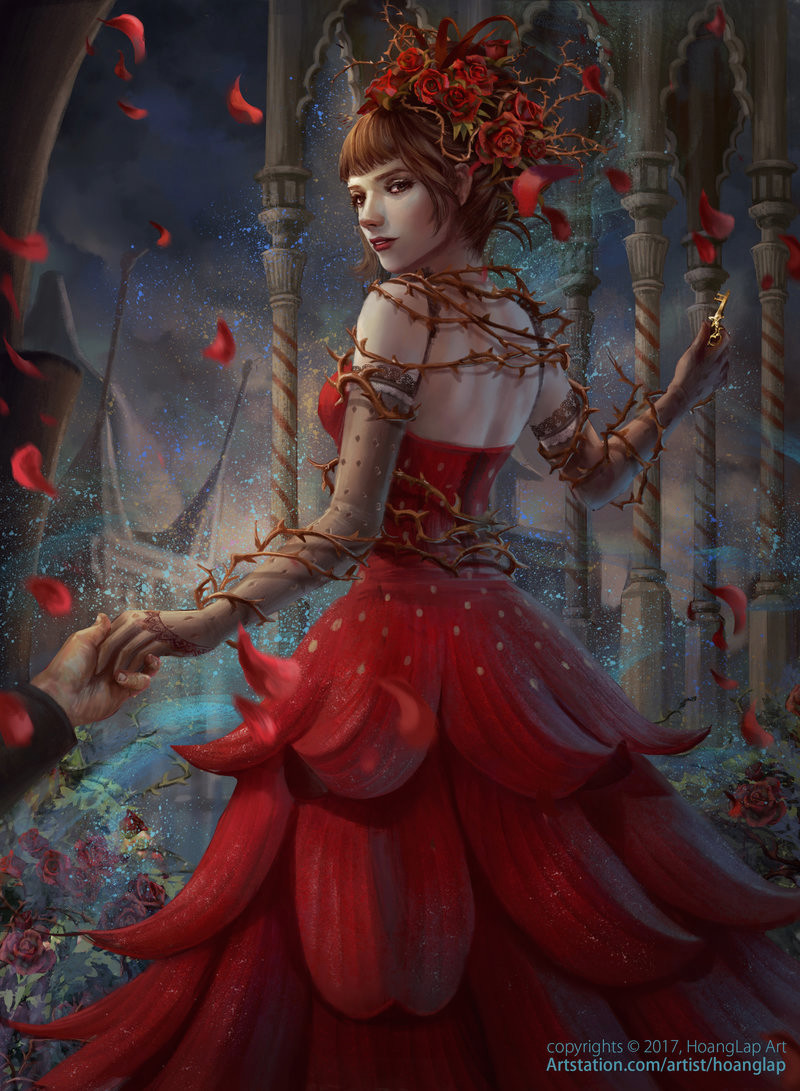
You’ve found a special rose! It loves you so much that it’s growing with you and you can carry it forever and ever. It tells you about all the wonderful things there are to see and all the stupendous people there are to hug and share stories with!

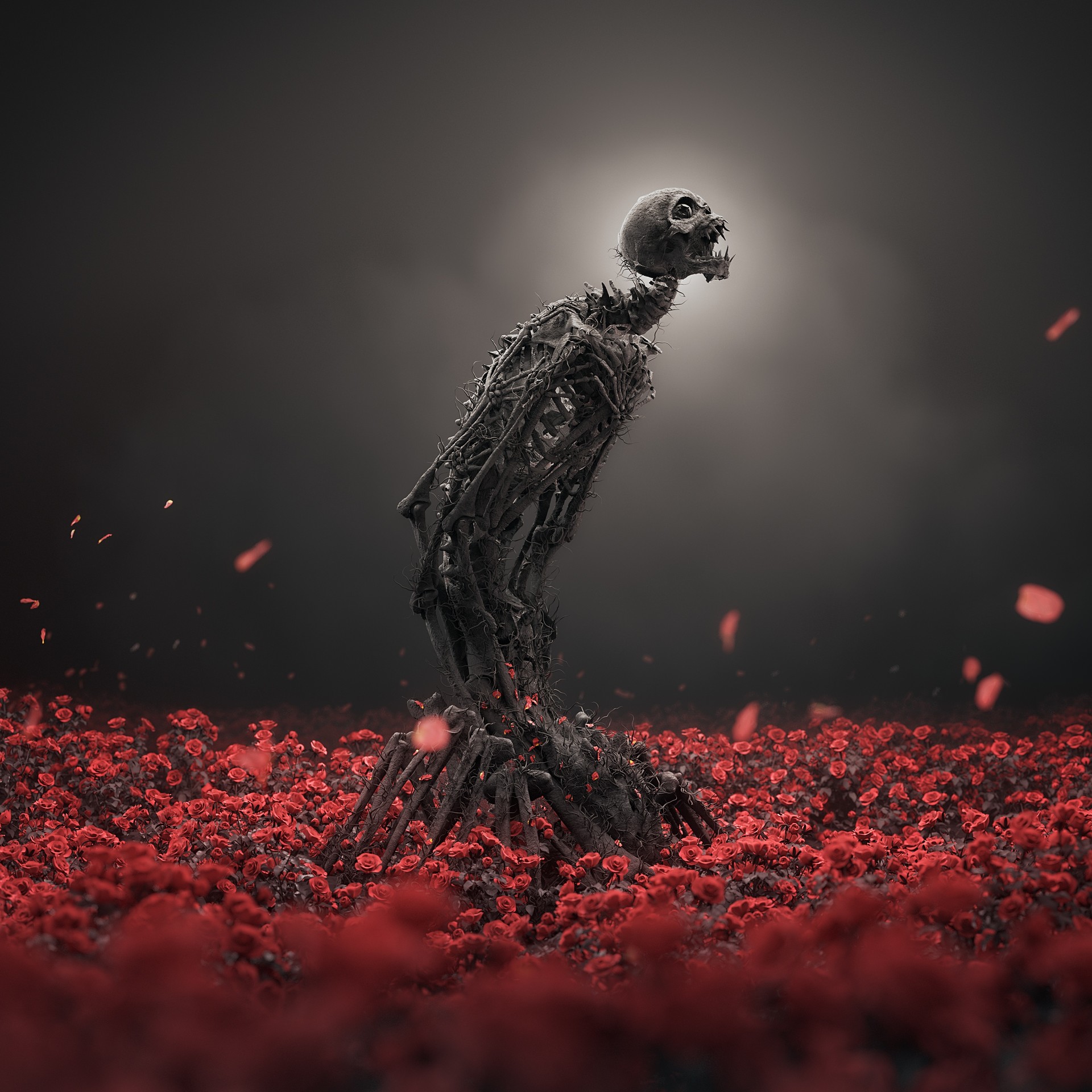
Vadim Romanov

People will love you anywhere you go because you smell good! Share the smells with people to make them happy. This is a sad, sad world we live in, and people need to be cheered up! If you come across a violent person, you can touch them with your rose friend, and rose friend will drain all the anger out of them and put them to sleep.

Rose friend can also drain jealousy, envy, and all the other frets and worries people carry with them. Make friends! Help them calm down! Grab things with rose friend! Share good smells!

Other parasite submissions!
BioconBody KingCuckoo FolkEater of TonguesHydrargentKlyntarMother of OskMycorrhizanPARASITEParasite BrainSpellbugTemporal ParadoxUmbrant

This challenge brought to you by Micah of Nuclear Haruspex!
GLOG Class: Vine Servant

A: Blossoms, Happy, Parasite Die
B: Vine
C: Pigment Shift
D: Heartwood

You gain +1 HP for every Vine Servant template you have. Whenever an effect asks for your number of templates, use the number of Vine Servant templates you have.

Your Parasite Die controls the effectiveness and intensity of your powers. It starts as a d20. When you use your powers that tell you to roll your PD, roll it, and consult the Manifestation Table. Whenever you roll a 1 on your PD, it decreases by one dice size. (d20-d12-d8-d6-d4).
When your PD becomes a 1d4 and you roll a 1, your Parasite consumes your mortal shell and enters its final form in a glorious transformation. You die horribly.
Even if you never use your powers, you still must roll your PD once a week to see if it decreases in size.

Manifestation Table (roll the appropriate dice)

  1. Apotheosis. You choose the desired effect which doubles in intensity and take 1 damage. Your PD decreases by one step.
  2. Two effects. One that you want, another of the DM’s choice.
  3. Roll two effects on the appropriate feature table and pick one.
  4. Some other randomly rolled effect from another feature triggers.
  5. An effect of your choice. 
  6. The DM chooses what effect triggers.
  7. You choose the effect, but it’s inverted if possible (you don’t know it’ll be inverted).
  8. Roll on the appropriate feature table and apply the effect.
  9. You have -2 to your next Save.
  10. An effect of your choice triggers.
  11. Next time you take damage, you double it.
  12. An effect of your choice triggers but it’s half as powerful.
  13. Nothing.
  14. The effect is determined randomly and inverted if possible.
  15. Nothing.
  16. Nothing.
  17. You take 1 damage for every time you’ve rolled on this table today.
  18. Nothing.
  19. Nothing.
  20. Save or gain a plant based mutation of the DM’s choice.

You can sprout gorgeous Blossoms from your body and pick them. When you do so, roll your PD on the Manifestation Table and then consult the Blossom Table if necessary. The effects of any Blossom last for [template] minutes, after which they become a normal, if beautiful, rose. The range of all Blossom effects is equal to [template] x 5’, centered on the rose. You are immune to your own Blossoms, and you can only use each Blossom once a day.

Blossom Table (roll 1d6 if you must)

  1. Yellow Rose. Creatures must Save or be overcome with an overwhelming reproductive impulse.
  2. Red Rose. Creatures must Save or have their emotions amplified dramatically.
  3. White Rose. Creatures must Save or take damage equal to the half the damage they’ve inflicted in the last minute.
  4. Lavender Rose. Creatures must Save or have their movement and actions cut in half. 
  5. Pink Rose. Creatures must Save or forget the last minute.
  6. Black Rose. The first creature to fail its Save against this rose dies if its [HD] < [templates]. The black rose dissolves immediately after it kills a creature.

You’re a Happy person! You rationalize all the horrible things you do to others quite easily and have a [template] bonus to Saves against mental trauma or realizing what you’ve become. If you ever fail a Save of that nature, though, the effects are twice as bad.

Hoang Lap

Your rose sprouts a small Vine from a location of your choice. This vine has a length equal to [template] x 5’ and deals 1d4 damage if used as a weapon. If the vine is cut, you lose 1 HP for every 5 feet lost; the vine regrows 1’ a day. It can carry an object that weighs [template] pounds or less and support up to your weight. You can only use each Vine effect once a day.

Vine Table (Roll 1d4 if you must)

  1. Drain. A creature within the reach of your vine must Save or lose [template] HP. You gain the HP it lost. Any excess provides a bonus to your next Save equal to the excess HP gained.
  2. Transfer. You may lose up to a maximum of [template] x 2 HP to give that HP to a creature within the reach of your vine.*
  3. Shred. The next [template] attacks you make with the vine have their damage dice increased by one step.
  4. Extract. A creature within the reach of your vine must Save or you extract a fluid of your choice (poison, urine, etc) from it. You can store a bit of this substance inside yourself for [template] days, after which you suffer its effects unless you discharge it. You may discharge a stored fluid into another creature or a container. Unwilling creatures get a Save to avoid this.*

*if a creature is affected by this ability, it must Save or be infected by a Mictla Rose seedling. If it fails, its next template must be a Vine Servant.

Your rose can Pigment Shift your skin once per day. If you move slowly, the color of your exposed skin blends in perfectly with the background for [template] minutes.

Your tender flesh is partially replaced with Heartwood, and you reduce all bludgeoning/slashing damage by 3.

When the rose consumes and subverts your fleshy shell, you root to available dirt at the earliest opportunity and become a huge, carnivorous rosebush that seeks edible meat. Possibly your companions.

Sebastian Montecinos

Design Notes
: Holy hell is this class mechanically complicated for a GLOG class. I have absolutely no idea how balanced this is or how well it’d play at the table. I didn’t have time, but I think I’m going to retrofit this class into a more encompassing Parasite class later with that delicious decreasing dice mechanic.

The biggest hangup is the Parasite Dice. I've tried to balance it, but I simply have no idea how well it will work. I can estimate math (if you count nothing as a bad effect, 12/20 or 60% of the time a d20 will crap out on you); I still have no idea how long an infested PC will last. Assuming that a dice rolls perfectly randomly, a 1 on the d20 should crop up after 20 rolls? And then 12 rolls for a d12, 8 rolls for a d8, 6 rolls for a d6, and 4 rolls for a d4. So this class has around 40 rolls in it? 40 uses of your powers, count them carefully.

I considered condensing the Parasite Dice with a Blossoms/Vine table but I decided that if I want the PD model to be adaptable to different parasites I should leave them separate.

Speaking of the Blossoms/Vine tables, I'm worried about their usability. The first two dice steps (d20 and d12) grant the uncertain use of features, but d8 and under becomes increasingly reliable and predictable. Does this power scale well? Are the features strong enough to be useful but still potentially dangerous enough if triggered wrongly to prompt second thoughts about spamming them? These are questions I think only playtesting can answer.

By the time a Vine Servant's powers become super useful, using them too much can lead quickly to death. I think that tension will go a long way towards counterbalancing the pull of strengthened abilities but then some players just run characters into the ground. Forming an attachment to a PC with this infection is risky anyway. More than anyone else, Vine Servants are going to die. It's just a matter of time.

I think this class has some great tools but I'm worried about it outshining other classes at lower levels. If a player gets "lucky" and decreases their PD on the first couple rolls, then they can enjoy higher levels of power while the rest of the party has a limited repertoire.

I really like this class concept: a time bomb. Kind of like the Biocon. Like my favorite GLOG classes, you can access great power relatively easily, but using it will surely damn you. Your expiration date is just more sure than most.

10,000 Chambers of the Cnite King

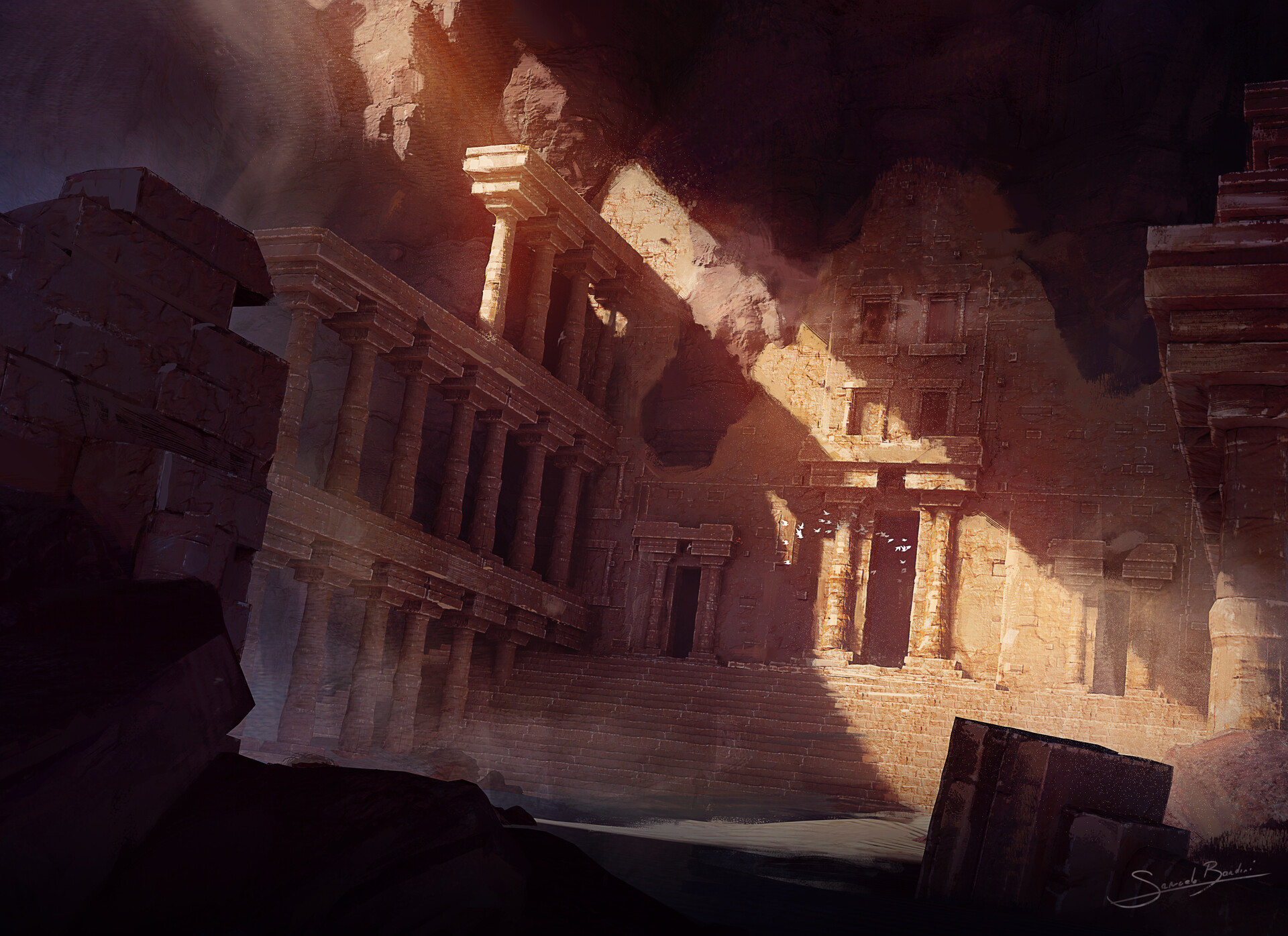
Deep within the turgid reaches of the Samarkand Desert, a lone crag of withered sandstone presents a visage long scoured by time.  Samuele B...